
Start with moisture-wicking base layers—Merino wool or synthetic blends beat cotton every time. Layer a mid-layer for warmth, then add a breathable shell that blocks wind and rain without trapping sweat.
Choose pants or shorts based on season and terrain (shorts for summer, pants for brush). Get the fit right: snug, not restrictive.
Add UPF protection, proper socks, and broken-in footwear. This system adapts to whatever conditions you’ll encounter.
Start With the Right Base Layer: Merino Wool and Synthetic Blends
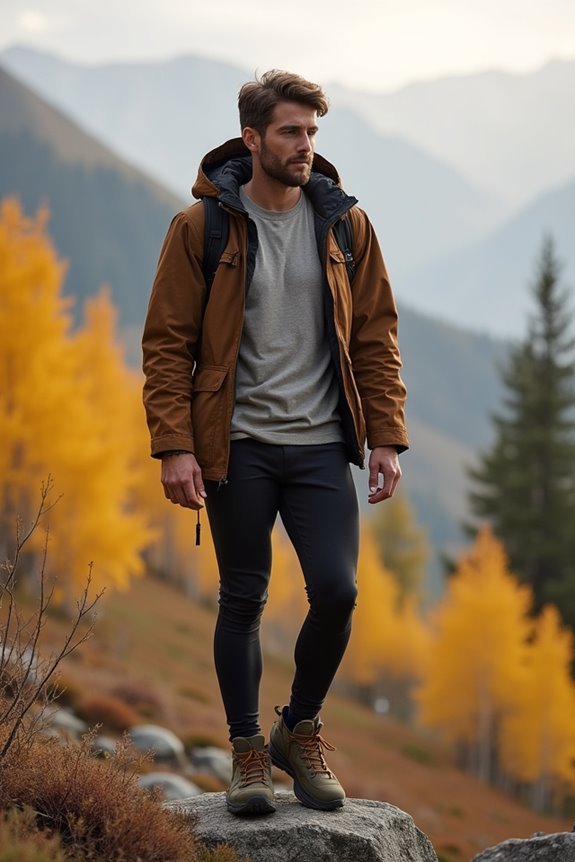
Why do so many hikers still reach for cotton when they’re gearing up for the trail? I’ll be honest—it’s a mistake we’ve all made. Your base layer sits closest to your skin, and it’s arguably your most critical piece of gear.
Your base layer sits closest to your skin and is arguably your most critical piece of gear.
Merino wool deserves serious consideration. Unlike traditional wool (which, let’s face it, itches), Merino’s finer fibers feel soft against your skin. It’s lightweight, moisture-wicking, and keeps you comfortable during intense activity.
Synthetic blends—nylon and polyester combinations—offer another solid option. They’re breathable, equally effective at moving sweat away from your body, and often more affordable.
Both should fit snugly but never tight. Some Merino blends even provide 2% stretch for added flexibility. Skip cotton entirely; it retains moisture and wreaks havoc on temperature regulation. You’ll thank yourself later.
Season-Specific Adjustments: What to Wear in Spring, Summer, Fall, and Winter
Since weather doesn’t stick to a schedule—especially on the trail—your wardrobe shouldn’t either. Spring demands a moisture-wicking breathable base layer paired with a lightweight mid-layer and water-resistant shell to handle unpredictable rain. Summer’s your moment: I’d recommend synthetic or Merino base layers with UPF 30+ sun protection shirts and ventilation-zipped shorts for maximum airflow. Come fall, swap shorts for lightweight pants and add a warm fleece mid-layer beneath your protective outer shell. Winter is where your layering system matters most—snug base layer, heavy insulation, and a waterproof breathable shell with insulated, traction-ready footwear are necessary. The practical approach? Carrying an accessible outer layer year-round (because surprise storms happen), adjusting for elevation shifts, and relying on moisture-wicking fabrics to keep you comfortable across every season.
Why Cotton Fails on the Trail (and What to Wear Instead)
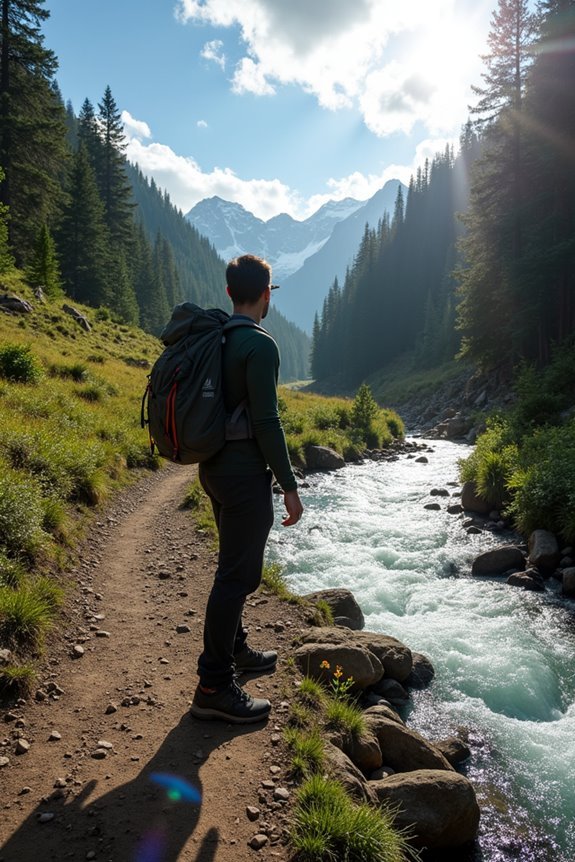
Now that you’ve got your seasonal strategy locked in, let’s address the elephant in your closet: that cotton t-shirt you’re tempted to pack.
Cotton absorbs sweat like a sponge, leaving you drenched and miserable—overheated in summer, chilled in winter. It’s the hiking equivalent of wearing a wet blanket. Instead, I’d recommend moisture-wicking synthetics and merino wool, which actively pull sweat away from your skin.
| Fabric | Moisture Control | Temperature Regulation | Quick-Drying |
|---|---|---|---|
| Cotton | Poor | Fails Both Ways | Slow |
| Nylon/Polyester | Excellent | Balanced | Fast |
| Merino Wool | Superior | Adaptive | Moderate |
| UPF Synthetics | Excellent | Good | Fast |
Merino wool is your natural option—lightweight, breathable, and comfortable. Nylon and polyester blends are reliable workhorses. And grab UPF protection; that low-SPF cotton shirt won’t cut it under intense sun exposure. You’ll benefit from the upgrade by mile three.
Choose Hiking Pants or Shorts Based on Season and Terrain
I’ve learned that choosing between shorts and pants isn’t about preference—it’s about reading the season and terrain like a trail map, because summer’s heat demands the ventilation shorts provide, while fall’s brush and bugs demand the protection pants offer. The real trick is selecting fabrics with the right weight and breathability (lightweight nylon-spandex blends, not cotton), then tailoring your fit and features—ventilation zippers, stretch panels, durable weaves—to match whether you’re hiking exposed ridges in July or scrambling through dense vegetation in October. Your legs, it turns out, have strong opinions about whether they’d rather breathe freely or stay defended.
Seasonal Fabric and Weight Selection
How do you know whether to pack shorts or pants for your next hike? I’ve learned that fabric weight and breathability matter more than you’d think. Lightweight, quick-drying fabric keeps you comfortable across seasons, while ventilation zippers on breathable hiking pants let you regulate temperature without stopping mid-trail.
| Season | Best Choice |
|---|---|
| Summer | Shorts with ventilation features |
| Spring/Fall | Breathable hiking pants |
| Winter | Insulated, layered clothing |
| High-mileage trips | Quick-drying pants |
| Variable elevations | Layered clothing strategy |
I’ve found that layered clothing adapts well to temperature swings. Start with light pants on cool mornings, then shed layers as things heat up. For sun protection, I’ll grab pants on exposed ridges, shorts on shaded forest routes. The right fabric choice means you’re hiking comfortably, not constantly adjusting.
Terrain-Specific Feature Considerations
While fabric weight handles temperature swings, the ground beneath your feet demands a different kind of attention. I’ve learned that your shorts vs pants choice hinges on what terrain’s actually waiting for you.
For summer trails with minimal brush, I reach for shorts—that 7-10 inch inseam gives you ventilation and movement freedom. But here’s where strategy matters:
- Dense vegetation requires full-length pants for leg protection
- Buggy environments demand ankle/leg coverage that shorts simply can’t provide
- Rocky, exposed ridges? Shorts work fine; you’re not fighting undergrowth
Lightweight pants with ventilation zippers let me adapt without overheating. I’ve also learned that cuff sizing matters—they should clear your boots and cinch tight enough to deter ticks (it works). Match your bottoms to your terrain, not just the thermometer.
Fit, Mobility, and Temperature Regulation
Why does a snug waistband matter more than most hikers realize? Proper fit directly impacts your mobility and breathable comfort on the trail. I’ve learned that pants with ventilation features—like mesh panels or strategic zippers—prevent overheating during elevation changes while maintaining core temperature regulation. When you layer effectively (base layer, mid-layer, then pants), you gain genuine flexibility without sacrificing protection.
The key is when your pants allow unrestricted movement at the hips and thighs. Too-tight gear restricts your stride; too-loose stuff creates annoying friction. Adjustable cuffs matter tremendously—they seal out debris while accommodating sock thickness and temperature swings. Pair this thoughtful construction with breathable fabrics, and you’re wearing intelligent clothing that adapts as conditions shift. That’s not overthinking it; that’s hiking smart.
Build Your Mid-Layer Warmth Without Bulk
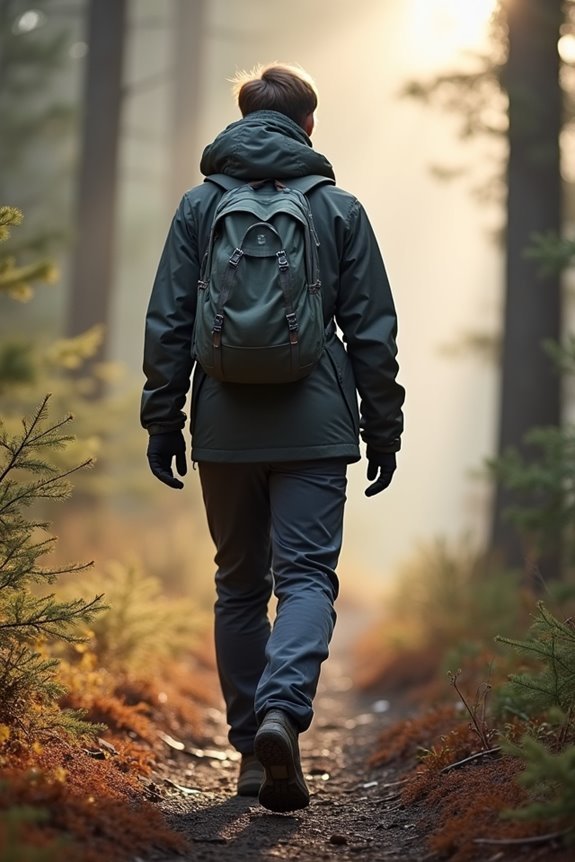
When it’s time to add insulation without turning yourself into a puffy marshmallow, you’ve got solid options that actually work. Mid-layer warmth doesn’t require bulk if you choose strategically.
Consider these approaches:
- Performance fleece pullovers offer breathable mid-layer protection while staying lightweight and packable
- Merino wool sweaters regulate temperature naturally, managing moisture without that clammy feeling
- Vest layering provides core warmth minus the sleeve restrictions that hinder movement
Here’s what matters: your mid-layer must breathe while trapping heat. On high-activity days, lighter options prevent overheating. When conditions turn brutal, heavier merino wool or fleece handles serious cold without the bulky outer shell. You’re stacking thin, effective layers rather than relying on one thick piece—a straightforward approach that keeps you comfortable whether you’re ascending steep terrain or descending into unpredictable weather.
Pick an Outer Shell That Breathes and Sheds Water
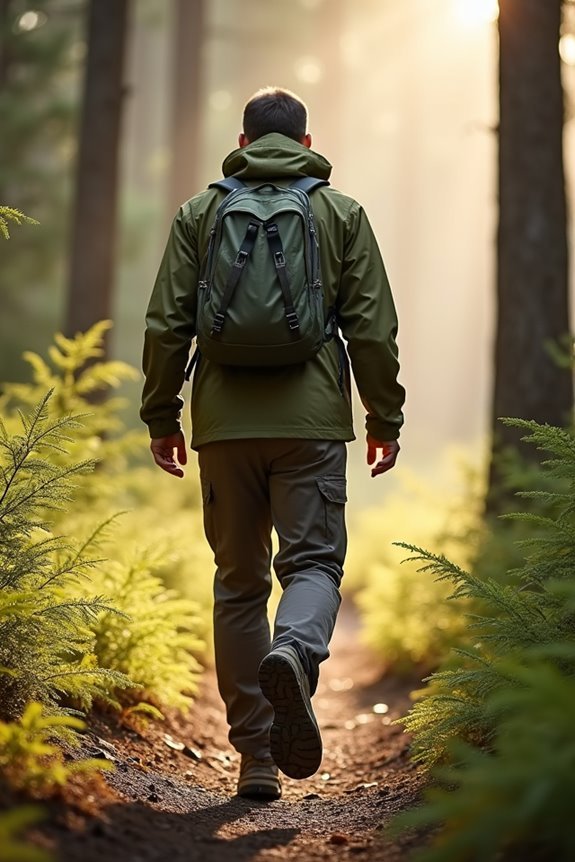
When you’re sweating uphill in summer or facing unexpected drizzle on the trail, you’ll want an outer shell that actually breathes—not one that traps moisture like a plastic bag (which, I’ve learned the hard way, defeats the entire purpose of layering). I recommend looking for jackets with breathable, water-resistant fabrics that let your sweat escape while keeping rain out; 2.5-layer or 3-layer constructions work best here, though 2.5-layer versions require a bit more maintenance to avoid wetting out. Venting features like armpit zippers provide real benefits during active hiking, as they prevent that clammy feeling that turns a good day miserable.
Breathability And Moisture Management
How’s this for a hiking reality: you’ve got sweat pouring down your back while rain hammers your jacket, and suddenly you’re choosing between two terrible options—soaked from the inside or drenched from the outside.
Breathability and moisture management address this problem directly. Pairing a breathable outer shell with moisture-wicking base layers creates an effective defense system. Your shell needs to balance protection with airflow, preventing overheating while repelling rain.
Consider these moisture-management strategies:
- Ventilation features like armpit vents enable moisture vapor transfer, keeping internal humidity low
- Waterproof membranes shed external moisture while breathable fabrics let sweat escape
- Layering properly means your base layer wicks sweat away before it reaches your shell
The result? You’ll stay dry from both directions—comfortable and functional rather than simply less miserable.
Water-Resistant Shell Construction
Your outer shell is the critical barrier between comfort and misery on the trail—and not all shells are created equal. I’ve learned that breathability matters as much as water resistance; you’ll overheat in impermeable jackets regardless of rainfall. Three-layer construction offers durability for serious backpackers, while 2.5-layer options provide lighter alternatives (though they’ll wet out without care).
| Construction | Durability | Breathability | Best For |
|---|---|---|---|
| 2-Layer | Moderate | High | Day hikes |
| 2.5-Layer | Good | Very High | Ultralight trips |
| 3-Layer | Excellent | Moderate | Extended backpacking |
Water-repellent treatments shed light rain effectively, but ventilation features—armpit zippers especially—prevent that sauna effect during climbs. I prioritize shells balancing moisture management with breathability; they’re valuable tools for staying comfortable, dry, and part of the hiking community.
Sun Protection: UPF Ratings and Protective Clothing
Why’d I spend years hiking in regular cotton shirts before realizing they’re basically transparent to UV rays? Cotton tops offer merely UPF 5—practically nothing. Now I understand sun-protective clothing isn’t optional; it’s required gear.
UPF ratings tell you how much UV radiation clothing blocks. UPF 30 allows roughly 3% penetration, delivering substantial protection. Higher values provide even better coverage.
Quality sun-protective clothing features:
- Moisture-wicking fabrics that move sweat away from skin
- Quick-drying synthetic blends or Merino wool for added comfort
- Loose fits promoting airflow during strenuous activity
I’ve also discovered protective hats with wide brims shield my neck and ears effectively. Some shirts incorporate built-in sun protection features like thumb holes for extra wrist coverage. These practical details improve your hiking experience from uncomfortable to more comfortable.
Get Your Hiking Footwear Right: Boots, Trail Runners, or Sandals
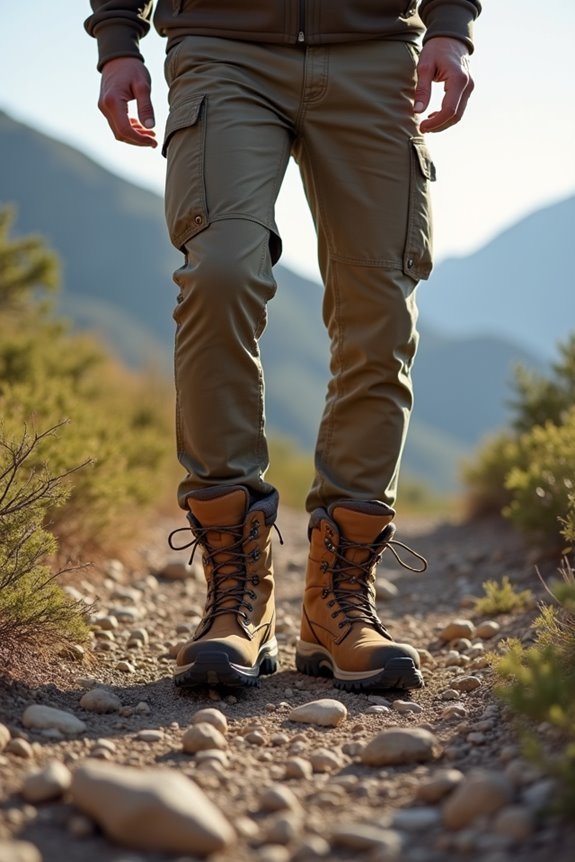
Once you’ve got your skin protected from the sun, it’s time to look down—because what’s on your feet matters just as much as what’s covering your torso. I’ve learned that the right footwear choice depends entirely on your terrain. Rugged, rocky trails demand hiking boots for ankle support and durability, while easier paths suit trail runners for speed and breathability. Here’s the thing: trail runners dry quickly and keep feet cooler (important for summer hikes), whereas boots excel on punishing brush. Before committing to any footwear, break them in thoroughly—blister prevention is paramount. Pair your choice with moisture-wicking socks, preferably merino wool or synthetic blends. Balance comfort, traction, and durability. Your feet will appreciate it.
Choose Hiking Socks That Keep Feet Dry and Blister-Free
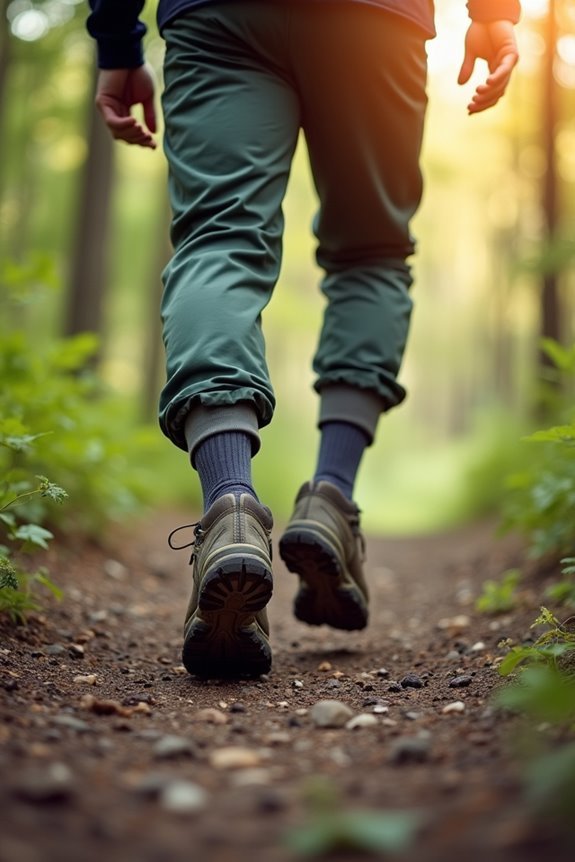
How often do hikers overlook the one thing standing between their feet and complete misery? Your socks matter—seriously.
I’ve learned that moisture-wicking socks, whether merino wool or synthetic blends, improve your hiking experience. They keep feet dry while preventing blisters that’ll derail your trail adventures. Here’s what separates effective options from foot torture:
- Moisture management: Merino wool and synthetic materials pull sweat away from skin, preventing the wet environment where blisters thrive
- No-chafe construction: Secure placement prevents sliding and bunching that causes friction hotspots
- Strategic cushioning: Extra padding in heels and toes absorbs impact and protects vulnerable areas
Skip cotton entirely—it traps moisture like a sponge. Before committing to long hikes, test your sock-and-shoe combination on shorter trails. This small investment pays dividends when you’re mile twelve deep and your feet feel fresh.
Snug Beats Tight: Why Fit Matters More Than You Think
You’ve got your socks dialed in, but here’s where most hikers stumble: they think base layers should feel like a second skin, then proceed to cinch themselves into compression wear that’d make a boa constrictor jealous.
Snug beats tight every time. Merino base layers offer that perfect moisture-wicking fit without restricting movement. You want close-to-skin comfort that lets you breathe, not garments that cut off circulation halfway up the trail.
The fit lives in lightweight layering. A crew neck or quarter-zip in breathable fabrics moves with your body, regulating temperature efficiently without bulk. Your base layer stays next to skin, creating that snug fit designed for the entire layering system to function properly.
Think of it this way: you’re building a team, not a straitjacket.
Sun Protection Gear: Hats, Sunglasses, and Skin Care
What separates a comfortable summit day from a lobster-red nightmare? Smart sun protection gear.
I’ve learned that layering defense matters more than any single product. You’ll want:
- UPF 30+ garments (sun hoodies and protective shirts) that wick moisture and minimize sunscreen reapplication
- Quality headwear like wide-brimmed hats or booney styles that shield your face, neck, and ears while staying breathable
- Polarized sunglasses such as Oakley Mainlink XL models that reduce glare on bright trails
Here’s the thing: sunscreen alone won’t cut it. Pair it with a quick-drying visor like the OR Trail LT, then reapply sunscreen regularly to exposed skin—even when clouds trick you into thinking you’re safe.
This combination makes your hiking experience more enjoyable than trying to survive with inadequate protection.
The Complete Hiking Outfit: Building Your Layering System
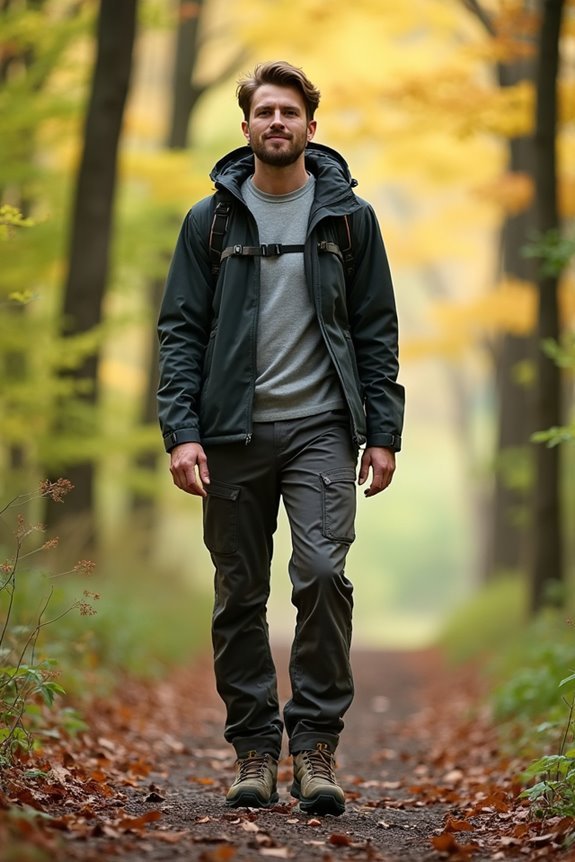
I’ve learned that building an effective hiking outfit starts with understanding how each layer does its job—your base layer (think Merino wool or poly blends) sits closest to your skin and whisks moisture away, while your outer shell protects you from wind and rain without trapping heat inside. What I’ve found most practical is treating these layers as a system rather than separate pieces; a snug base layer paired with a mid-layer and a packable 2-layer shell gives you flexibility without the bulk that makes you feel like an overstuffed sleeping bag on the trail. Getting the fit right across all three components matters more than you’d think, because even the best moisture-wicking fabric loses its advantage if your layers are so tight they restrict movement or so loose they create dead air space that defeats the purpose.
Base Layer Foundation Essentials
Because temperature regulation starts at the skin, your base layer’s job is arguably the most critical in the entire hiking outfit—it’s the unsung hero that prevents you from becoming either a sweaty mess or a shivering mess, depending on conditions.
I’ve learned that a quality Merino base layer outperforms traditional wool because it’s lightweight, reduces odor, and actually feels good against your skin (which is worth noting). Your base layer fit matters too—snug without restriction, with slight stretch for comfort.
Here’s what makes moisture-wicking essential:
- Pulls sweat away from skin before overheating occurs
- Pairs seamlessly with mid-layers and shells in your layering system
- Keeps you comfortable during temperature swings
Choose crew neck or quarter-zip tops for venting flexibility. Breathable fabrics combined with proper fit create the foundation every hiker needs.
Shell Protection And Breathability
How you’ll stay dry matters far more than most hikers realize, yet it’s easy to get wrong. Your breathable shells form the critical outer barrier in your layering system, blocking wind and precipitation while preventing the moisture trap that ruins everything underneath. I’ve learned that three-layer constructions—with their durable face fabric, waterproof membrane, and inner lining—outperform lighter alternatives on demanding trails. Two-layer options work fine for fair weather, but they risk “wetting out” eventually. Pair your waterproof shells with moisture-wicking base layers beneath, enabling proper moisture management that keeps you comfortable. Features like armpit vents prevent overheating during climbs. Choose reinforced panels on shoulders and chest if you’re carrying a pack. Your shell isn’t glamorous, but it’s non-negotiable.
Prioritize Lightweight Layers: Carry Only What Your Hike Demands
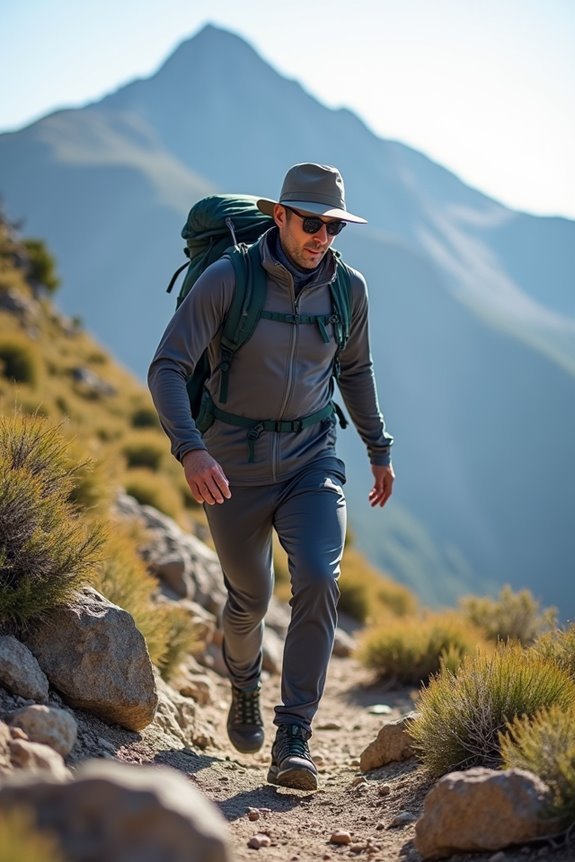
When you’re miles from the trailhead and the weather shifts, you’ll wish you’d mastered the art of strategic layering—because what you wear directly determines whether you’re comfortable or miserable. I’ve learned that lightweight layering isn’t about stuffing your pack; it’s about choosing intelligently.
Here’s what actually works:
- Base layer: Moisture-wicking fabrics (merino wool or nylon blends) that pull sweat away from skin
- Midlayer: Thin fleece or insulated options that compress easily and add warmth
- Outer shell: Breathable protection that doesn’t trap heat or humidity
The trick? Pack only what your specific hike demands. A summer ridge walk needs different gear than a winter ascent. By balancing weight, mobility, and weather protection across these three layers, you’ll move efficiently while staying protected—no unnecessary bulk dragging you down.