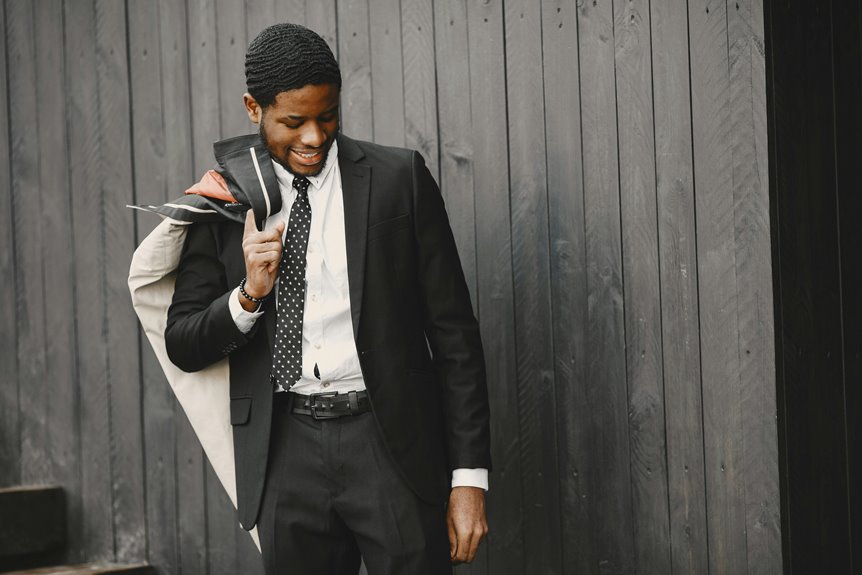
Your outfit speaks before you do, so let’s make it count. I’d recommend starting with neutral foundations—navy, charcoal, or grey—that let your qualifications shine.
Match your formality to the company: dark suits for finance, business casual for marketing, smart casual for tech.
Make sure everything’s tailored properly (fit matters more than labels), pressed, and wrinkle-free.
Add minimal accessories, polish your shoes, and groom meticulously.
There’s considerably more nuance to nailing this, though.
Understand Your Interview Type and Dress Code
Why does the interview format matter when you’re picking out your outfit? Simple—the interview type directly shapes your dress codes and overall strategy. I’ve found that understanding whether you’re facing a one-on-one, group, or panel interview fundamentally changes how I approach preparation. Video interviews, for instance, allow you to wear a polished shirt with blazer (nobody sees below the desk, let’s be honest), while in-person meetings demand alignment with company standards. If you’re uncertain about the format, contact your recruiter—seriously, they expect this question. Knowing these details isn’t just about looking sharp; it’s foundational to interview readiness. You’re gathering intelligence that informs everything: attire, tone, even seating strategy.
Formal Interview Outfits: The Power-Packed Suit Look
When you’re stepping into a formal interview, the power-packed suit—a tailored dark ensemble paired with a crisp white shirt and conservative tie—serves as your visual argument for competence before you’ve even sat down. You’ll want to focus on the essential components: ensuring your suit fits with clean lines, your trousers are pressed sharp, and your shirt cuff shows just that half-inch of wrist (it’s oddly important), all while keeping accessories minimal and your shoes polished to an almost reflective shine. This isn’t about fashion; it’s about crafting a deliberate, wrinkle-free presence that communicates readiness and capability without needing to announce it.
The Essential Suit Components
If you’re aiming for a corner office—or at least an interview that doesn’t start with a raised eyebrow—a well-fitted suit is your foundation. I’d recommend investing in a suit in navy, charcoal, or black; these colors project authority without appearing overdone. Pair it with a crisp white or light blue dress shirt to set a professional tone immediately. The fit matters enormously: shoulders should align perfectly, sleeves revealing a quarter to half-inch of cuff. Your trousers need pressing with a clean break at the shoe. Add a restrained tie, minimal accessories (think classic belt, matching leather shoes, simple watch), and you’ve created an outfit that communicates competence before you’ve spoken a word.
Polishing Your Professional Presence
Presence—that intangible quality that announces you’re serious before you shake a hand—starts with intentional grooming choices. I’ve found that meticulous attention to appearance separates candidates who merely show up from those who command attention. A crisp dress shirt in white or light blue paired with your navy blue suit creates an undeniable foundation of authority. But here’s where it gets real: pressed clothes matter more than you’d think. I’m talking wrinkle-free fabrics, a close shave or trimmed beard, and hair that’s actually combed.
Skip the cologne excess (subtle beats musky every time). Your watch becomes your only real jewelry—keep it understated. These details aren’t vanity; they’re your nonverbal argument for why you’re worth hiring.
Business Casual Interview Attire: Striking the Right Balance
How do you nail that sweet spot between “I take this seriously” and “I’m not auditioning for a law firm”? Business casual strikes that balance well. I’d recommend pairing tailored trousers or chinos with a tucked-in shirt or polo—neutral colors like navy, black, beige, or grey work best. They’re versatile, professional, and frankly, forgiving. A blazer or sports jacket adds dimension to your look without demanding a tie (which you’ll skip here). Keep accessories minimal: a quality watch, matching belt and shoes, nothing flashy. The real factor? Fit matters more than labels. Well-ironed clothes with hemmed trousers and fresh socks signal competence and attention—the quiet confidence that makes interviewers take notice. You’re communicating, “I respect this opportunity” without overselling it.
Casual and Startup Interviews: Polished Yet Approachable
When you’re interviewing at a startup or casual workplace, you’ll want to abandon the tie-and-blazer formula entirely, instead opting for clean chinos paired with a tucked-in polo or shirt that signals you’re serious about the role without appearing stiff. The trick here’s balancing that relaxed vibe with unmistakable refinement—think minimal accessories, wrinkle-free fabrics, and perhaps clean sneakers or loafers that say you’re comfortable in your own skin, yet clearly ready to work. You’re demonstrating that professionalism isn’t about formality (a relief, frankly), but rather about showing respect through neat grooming, well-fitted basics, and an unpretentious approach to dressing appropriately.
Relaxed Yet Refined Aesthetic
For design, tech, and startup environments, you’re walking a deliberate line—one that says you’re approachable without appearing unprepared. I’d recommend pairing refined pleated trousers with a clean, tucked-in shirt in neutral tones like navy or soft blue. Add a leather belt and clean sneakers to ground the look in accessibility (the sneakers do the heavy lifting here). The goal isn’t casualness—it’s intentionality. Your outfit should photograph well under typical office lighting, which means avoiding graphic tees or anything disheveled. Keep accessories minimal: just the belt and perhaps a watch. This aesthetic tells interviewers you understand their culture while maintaining refinement. You’re communicating, “I fit here,” without trying too hard to prove it.
Tech-Friendly Dress Standards
What separates a thoughtful tech interview outfit from one that reads as “I didn’t try” often comes down to intentionality rather than formality. I’d recommend pairing neat chinos or refined pleated trousers with a clean polo or plain T-shirt—clean lines matter here. Add polished sneakers to signal you’re approachable yet professional (yes, sneakers count). Stick with solid colors in neutral tones: navy, grey, beige, or charcoal. Your understated attire shouldn’t distract from your actual qualifications, which is precisely the point. If you’re feeling fancy, layer in a lightweight blazer. Keep accessories minimal—they’re just noise. Make sure your trousers are ironed, your belt matches your shoes, and if it’s a video call, remember that your top half carries the entire conversation. Details whisper competence.
Balancing Comfort And Professionalism
How do you nail that sweet spot between “I’m serious about this opportunity” and “I’m not going to pass out from overheating in a full suit”?
Smart casual is your answer. I’d recommend well-fitted chinos paired with a crisp, tucked-in shirt—this combo signals you’ve made an effort without abandoning comfort entirely. Skip the suit for casual and startup environments; you’ll come across as uptight rather than qualified.
Focus on wrinkle-free fabrics and clean lines that won’t betray nervous sweating during those interactive rounds. Add loafers and a simple belt to ground your appearance professionally. Avoid loud patterns or oversized logos that distract from your qualifications.
The goal? You want interviewers thinking about your skills, not your outfit. That’s where you belong.
Virtual Interviews: Dress for the Full Camera View

When you’re interviewing through a screen, here’s what I’ve learned matters most: the camera captures only what’s in frame, yet that doesn’t mean you should treat the bottom half of your body like it doesn’t exist.
Dressing completely affects how you show up—literally. You’ll sit differently, move differently, feel different when you’re fully put together.
| Element | Why It Matters | My Recommendation |
|---|---|---|
| Blazer | Projects authority | Solid colors only |
| Shirt | Frames your face | Crisp, wrinkle-free |
| Lighting | Highlights professionalism | Position lamp at eye level |
| Posture | Conveys engagement | Shoulders back, upright |
Stick with solid colors—they photograph cleanly without distracting. Good lighting affects how your outfit reads on camera. Skip the strong cologne; nobody needs that surprise through their speakers. Minimal accessories work best. You’re not preparing for what viewers see; you’re preparing for who you become when fully dressed. That matters.
Five Complete Outfit Combinations for Different Industries
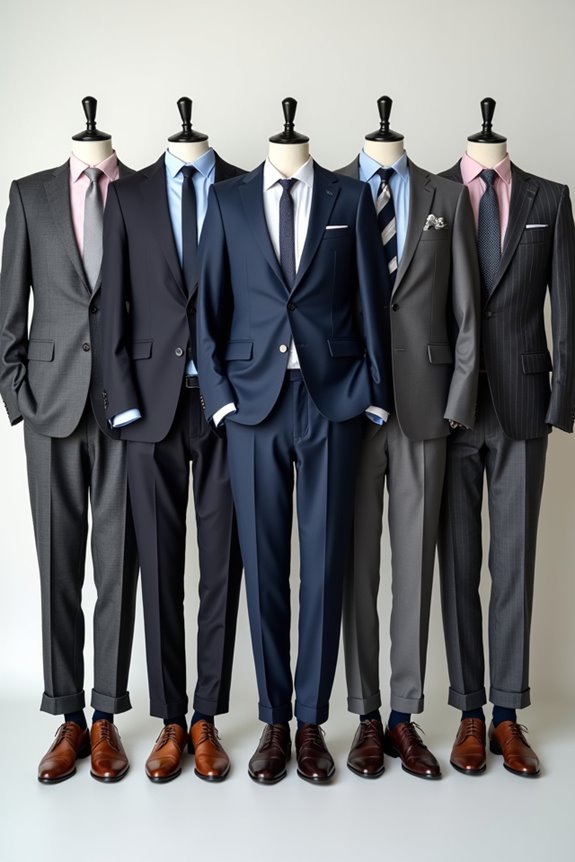
Since you’re interviewing across vastly different industries, you’ve got to match your outfit to the room’s actual temperature—and I don’t mean the thermostat.
For finance or law, I’d wear a dark suit, white shirt, and polished leather shoes (the uniform exists for a reason). Marketing demands business casual: tailored trousers, a tucked shirt, maybe a blazer if you’re feeling cautious. Tech startups? Smart casual attire works well—chinos, a solid tee, clean sneakers. You’re signaling you’re competent without pretending to be someone you’re not.
The pattern here isn’t rocket science: conservative industries reward formality; creative ones appreciate approachability. Each outfit communicates respect for the company’s culture while proving you’ve done your homework. That’s the real advantage.
Interview Outfit Fit: Why Tailoring Matters More Than Labels
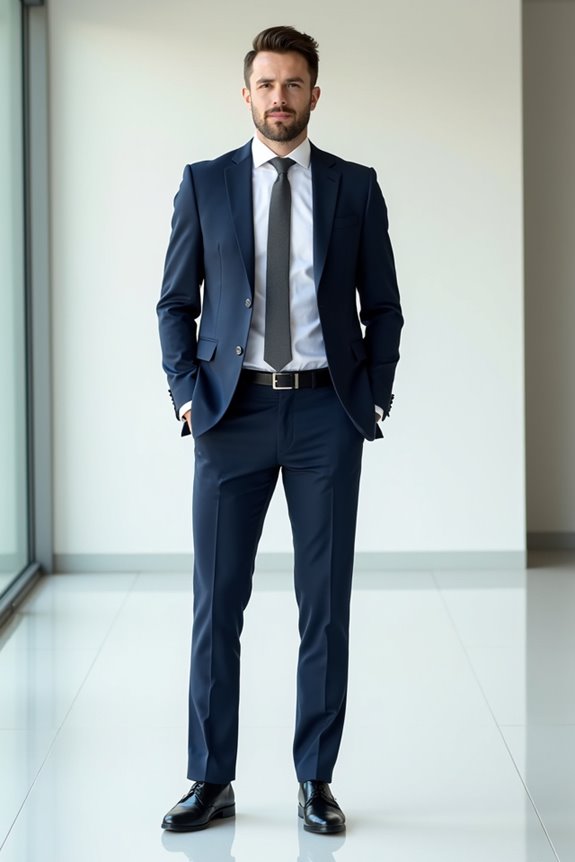
You’ll notice something interesting when you walk into an interview room: the candidate wearing a $200 suit that’s properly tailored often commands more presence than the one in a $2,000 designer label that doesn’t fit quite right.
Here’s the truth—tailoring matters far more than labels. When your jacket aligns at the shoulders and your sleeves hit your wrist correctly, you project competence. Ill-fitting garments undermine even premium fabrics; they signal carelessness, which interviewers interpret as a lack of attention to detail.
I’d recommend prioritizing essential alterations: sleeve length, trouser hem, and jacket waist. These adjustments transform off-the-rack pieces into refined assets. A properly fitted outfit balances structure with comfort, allowing you to move confidently without constraint.
The fit directly impacts how interviewers perceive you. Invest in tailoring, not labels.
Interview Outfit Colors: Which Neutral Tones Work Best
I’ve found that nailing your interview outfit color comes down to one principle: neutral tones aren’t boring—they’re strategically invisible, letting your qualifications do the talking instead of your tie. Navy, black, beige, and grey give you a versatile toolkit (think of them as the reliable friends who won’t embarrass you at the party), and when you layer them into a monochrome palette, you’ll project a composed, deliberate appearance that hiring managers interpret as competence. The benefit here is that these colors work across industries and formality levels, so whether you’re interviewing at a law firm or a tech startup, you’re prepared without having to overthink the decision.
Navy, Black, And Beige
How do you pick a color that whispers “competent professional” rather than screaming “I raided my dad’s closet”? Navy works as your foundation—it conveys authority without the severity of black. Pair it with a crisp white or light blue shirt, then anchor the look with matching black or brown shoes. Black itself demands respect but can overwhelm your face, so balance it with lighter shirts to avoid appearing funereal. Beige or khaki trousers soften your entire palette, making them suitable for business casual or startup environments where rigid formality feels out of place. The real trick? Match your belt and shoes within these neutral families. Mixing multiple bold tones disrupts the cohesion you’re cultivating—and interviewers notice.
Grey Tones For Versatility
While navy and black command respect through sheer force of convention, grey tones offer something subtler—they’re the diplomatic choice that works harder because they don’t announce themselves. I’ve found that grey’s versatility makes it the interview uniform for the strategically ambitious. Light grey conveys approachability during startup conversations, while charcoal delivers formality when traditional industries demand it. Pair grey trousers with crisp white or light blue shirts—this combination projects polish without screaming for attention. Monochrome greys create streamlined silhouettes that elongate your frame and minimize visual noise. Skip glossy fabrics and high-contrast patterns, as they undermine your seriousness. Grey tones work because they don’t compete with your qualifications. You’re simply the professional the room expected to see.
Monochrome Palette Strategy Guide
Why does monochrome work so reliably for interviews? You’re creating a visual shorthand for professionalism. A monochrome palette—say, navy with lighter blue accents—elongates your silhouette while projecting polish that hiring managers notice. Navy and charcoal pair well with white shirts and black shoes, eliminating the visual noise that distracts from your professional image. The strategy’s simple: vary shades subtly (darker blazer, slightly lighter pants) for contrast without sacrificing that streamlined look. Stick to solid colors and understated textures like serge or twill—patterns fragment your coherence. On camera, this approach reads crisp and intentional. You’re not just dressing; you’re communicating confidence through restraint, which interviews reward.
Interview Outfit Details: Accessories, Grooming, and Final Touches
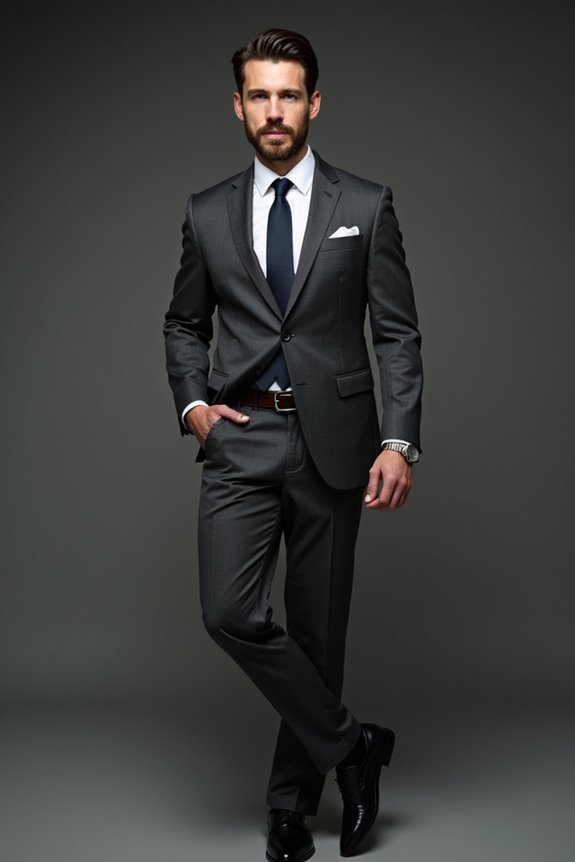
Once you’ve nailed the suit and shirt combination, the details matter—and that’s where most candidates either succeed or fall short. Your accessories should whisper, not shout. I’m talking a classic watch, leather belt matching your leather shoes, and subtle cufflinks for formal settings. These pieces signal you belong in the room.
Grooming matters equally. Pay attention to every detail: iron those trousers, keep your shirt crisp, and maintain impeccable hygiene. A fresh, subtle scent (think understated deodorant, not cologne) shows you respect the interview space.
Finally, leave the backpack behind. Carry a clean, professional handheld folder or leather bag for your documents. These final touches position you as a peer—someone they’d want working beside them.
Interview Outfit Mistakes: What NOT to Wear
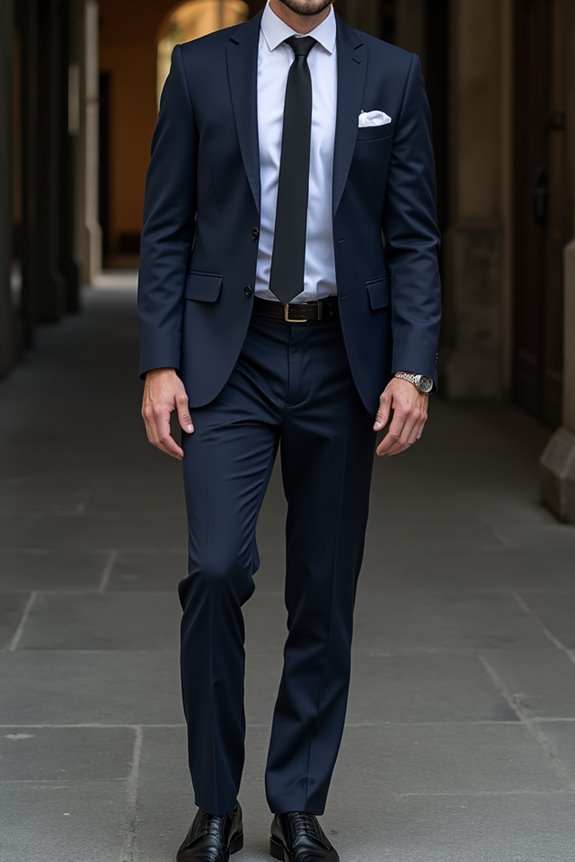
Equally important: fit matters tremendously. Oversized or skin-tight trousers scream unprepared. Choose classic, well-fitted cuts instead. Skip the backpack entirely—grab a clean, professional handheld bag or folder. Flashy jewelry and chunky watches? They’re attention-seeking distractions you can’t afford. These attire fundamentals separate serious candidates from casual applicants. Your interview outfit should whisper competence, not shout desperation.
Preparation Checklist: 48 Hours Before Your Interview
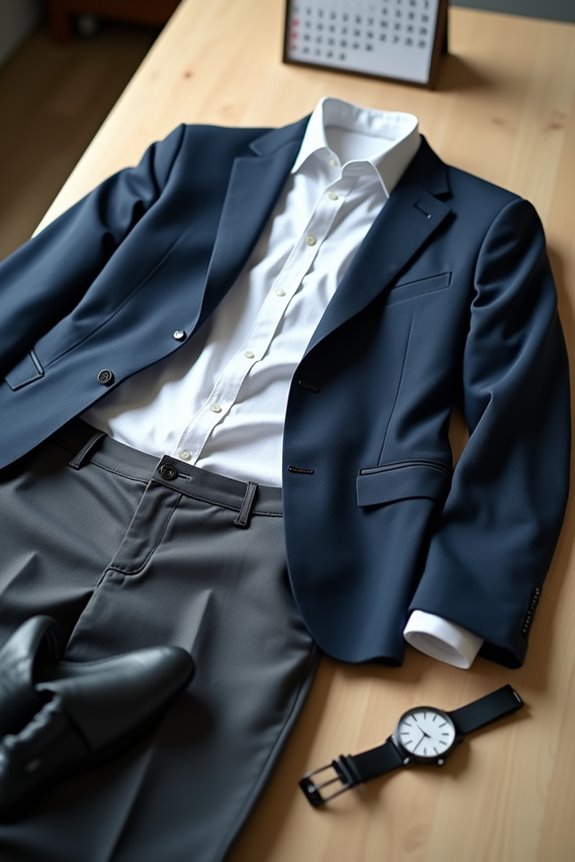
How should you spend the 48 hours before walking into that interview room? I’d argue it’s your chance to eliminate unnecessary stress and showcase professional competence.
- Confirm the interview format – Contact the recruiter to determine whether you’re meeting in-person, via video, or hybrid. This information lets you plan attire that aligns with both the casual dress code and professional expectations.
- Prepare your outfit strategically – Select neutral-tone pants (navy, black, grey), a crisp collared shirt, matching belt, and conservative shoes. Press everything. Wrinkled fabric signals lack of preparation.
- Assemble your materials – Pack a professional bag with resume copies, pen, and notepad. Avoid last-minute scrambling.
For video interviews, check your lighting and top-half appearance specifically. Small details matter.