
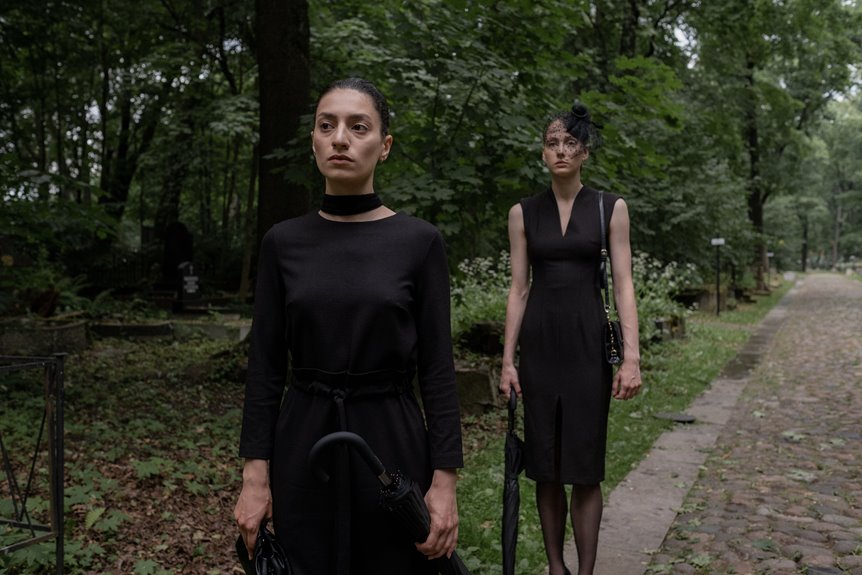
Funeral attire hinges on dark, conservative clothing that honors grief over personal style. I’d recommend men wear dark suits with crisp white shirts; women should choose knee-length dresses or skirts with modest blouses. Both genders benefit from closed-toe shoes, minimal jewelry, and season-appropriate layers. Skip bright colors, patterns, and flashy accessories entirely. If formal clothes aren’t available, renting or budget-friendly options work perfectly. When uncertainty strikes, contact the family directly—they’ll appreciate your thoughtfulness.
The specifics reveal nuances worth understanding further.
Dark, Conservative Attire: The Foundation of Funeral Dress
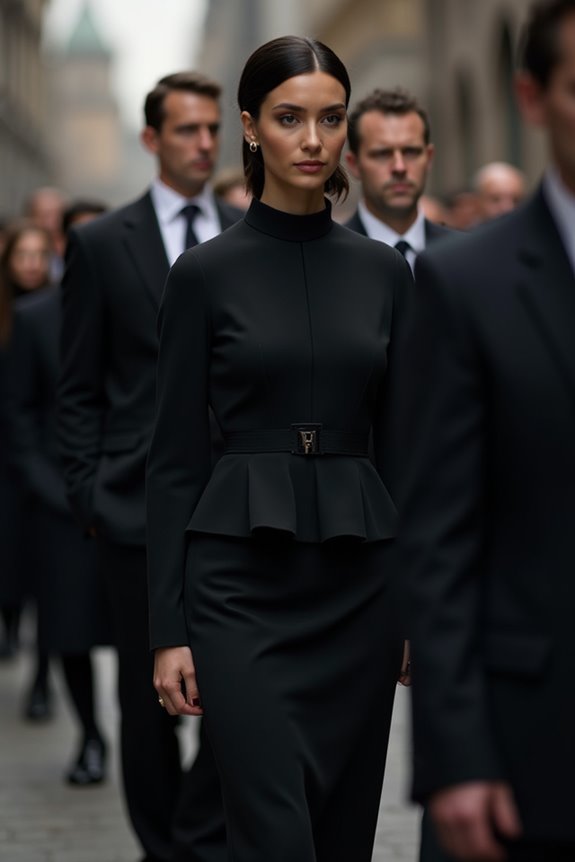
Why do we dress in dark clothes for funerals? It’s fundamentally about showing respect—and honestly, signaling that we’re part of a community bound by shared grief. Dark, conservative attire forms the foundation of appropriate funeral dress because it communicates solemnity without demanding attention (which, let’s face it, shouldn’t be on us anyway).
For men, this means a dark suit paired with a formal tie. Women typically wear conservative dresses or skirts reaching the knee or beyond. The color guidance is straightforward: black, navy, or charcoal gray symbolize mourning. These muted tones create an atmosphere of reverence that lighter colors simply can’t achieve.
Conservative funeral dress isn’t restrictive—it’s actually liberating. By adhering to these attire standards, we honor the departed while smoothly fitting into the solemn occasion’s expectations.
What Men Should Wear to a Funeral
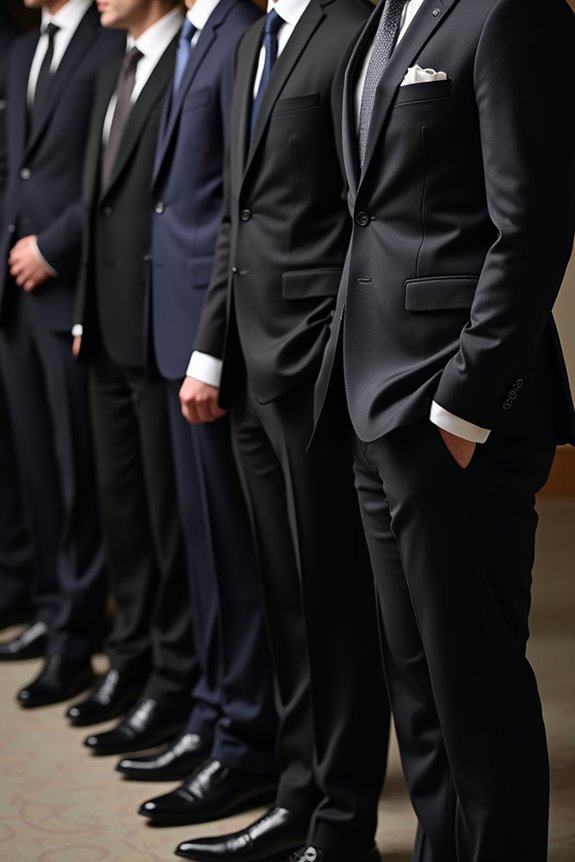
Now that we’ve established the foundational principles of funeral dress, let’s focus on how men can put those ideals into practice. Your funeral attire should center on a dark suit—black, charcoal, or navy—paired with a crisp white dress shirt and conservative tie. This combination signals respect without requiring excessive thought, which is appreciated during difficult moments.
Proper fit matters tremendously. Your jacket shoulders should lie flat, sleeves revealing roughly half an inch of shirt cuff. Polished black dress shoes complete the ensemble, while jeans, trainers, and casual wear won’t work.
A two-piece suit serves most occasions well, though three-piece options add formality. Keep accessories minimal—perhaps a watch and subtle cufflinks. Your belt should match your shoes in both color and style.
This approach allows you to look appropriately dignified.
What Women Should Wear to a Funeral
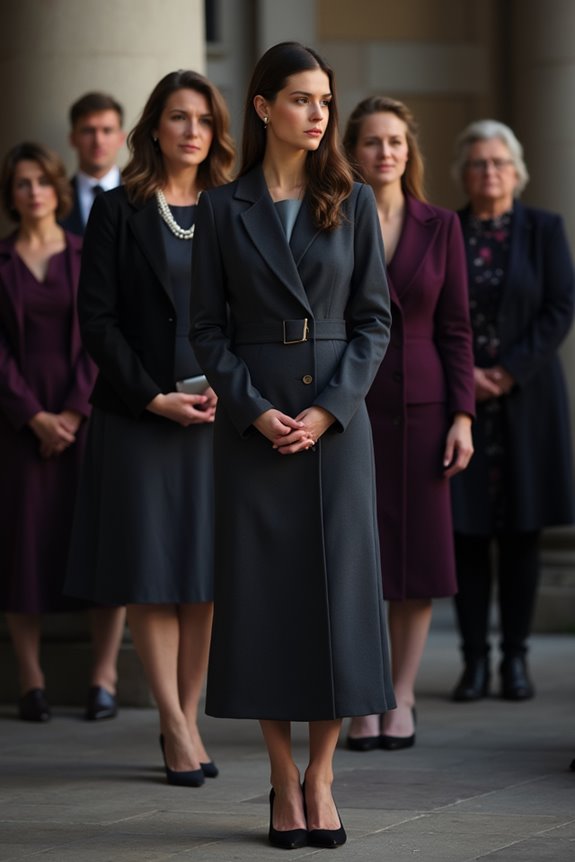
When you’re getting dressed for a funeral, I’d recommend focusing on conservative pieces—think knee-length skirts or dresses in dark, muted colors paired with modest blouses and cardigans that provide proper shoulder coverage (nothing too trendy). Your footwear and accessories should match this understated approach: closed-toe shoes that won’t betray you during hours of standing, minimal jewelry, and perhaps a simple scarf or shawl if the occasion calls for it. These choices aren’t about restriction so much as they’re about showing respect through your appearance, letting the occasion remain centered on honoring the deceased rather than making a fashion statement.
Conservative Dress Options
The foundation of respectful funeral attire for women rests on simplicity and restraint—think understated elegance rather than fashion statement. Build your conservative dress around knee-length skirts or dresses in dark colors paired with plain blouses and cardigans. Shoulders covered matters here; it’s a quiet signal of respect that people appreciate.
Closed-toe shoes in black or navy complete the look professionally. Skip the patterns, metallics, and anything remotely flashy—modest clothing speaks volumes through what it doesn’t display. Tights add formality without fussiness.
This approach to funeral attire keeps attention where it belongs: on honoring the deceased rather than your wardrobe choices. You’ll blend seamlessly with the occasion’s somber tone while feeling appropriately dressed.
Appropriate Footwear Choices
Your feet will thank you for choosing closed-toe shoes in black or navy—because let’s face it, you’ll likely be standing through a service, potentially traversing cemetery grounds, and the last thing you need is worrying about your footwear.
| Footwear Style | Best For | Why It Works |
|---|---|---|
| Flat shoes | All seasons | Stability on uneven terrain |
| Low heels | Extended standing | Comfort without flashiness |
| Loafers | Professional look | Conservative and practical |
Opt for dark-colored shoes that coordinate with your outfit while maintaining comfort. Avoid high heels or anything remotely trendy. For summer services, breathable materials keep your feet comfortable during extended time outdoors. Polish your shoes beforehand—this small detail demonstrates respect for the occasion. Remember, appropriate footwear reflects reverence, not fashion consciousness.
Jewelry And Accessory Guidelines
Once you’ve settled on appropriate footwear, it’s time to contemplate what you’ll wear above the ankle—and I’d argue jewelry deserves just as much thoughtfulness. The key here is restraint. I recommend choosing understated accessories that honor the occasion without drawing attention to yourself. A subtle watch, small earrings, or modest necklace work beautifully. These pieces complement your outfit while keeping focus where it belongs—on remembrance rather than adornment.
Here’s what I’d avoid: flashy jewelry that sparkles or clanks. Large statement pieces, bold metals, or anything that catches light aggressively simply doesn’t fit the mood. Think of your accessories as quiet supporters, not stars. Scarves and hats can work too, particularly in certain cultural contexts or outdoor services, but stick with subdued colors and simple styles. Your restraint speaks volumes about your respect.
Dressing Children for Funeral Services
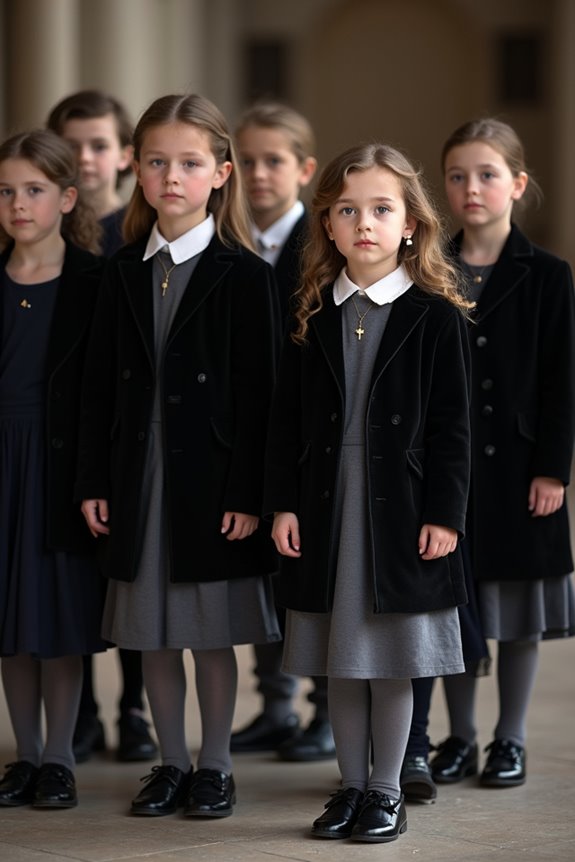
Dressing kids appropriately for a funeral requires thoughtfulness, though it’s admittedly less complicated than coordinating an entire family’s wardrobe for holiday photos. I’d recommend selecting dark colors—black, navy, or dark gray—that mirror adult funeral attire and demonstrate respect. For boys, a smart shirt with tie and dark trousers strikes the right balance. Girls might wear a conservative knee-length skirt or dress with a plain top, keeping accessories minimal. The key here? Comfort matters. Your children will sit through lengthy services and graveside moments, so choose fabrics that won’t cause fidgeting or complaints. Dark, closed-toe shoes work best. Think understated formality—nothing flashy, nothing uncomfortable, nothing that’ll distract from what matters. That’s solid children’s funeral attire.
When to Wear White, Grey, or Purple Instead of Black
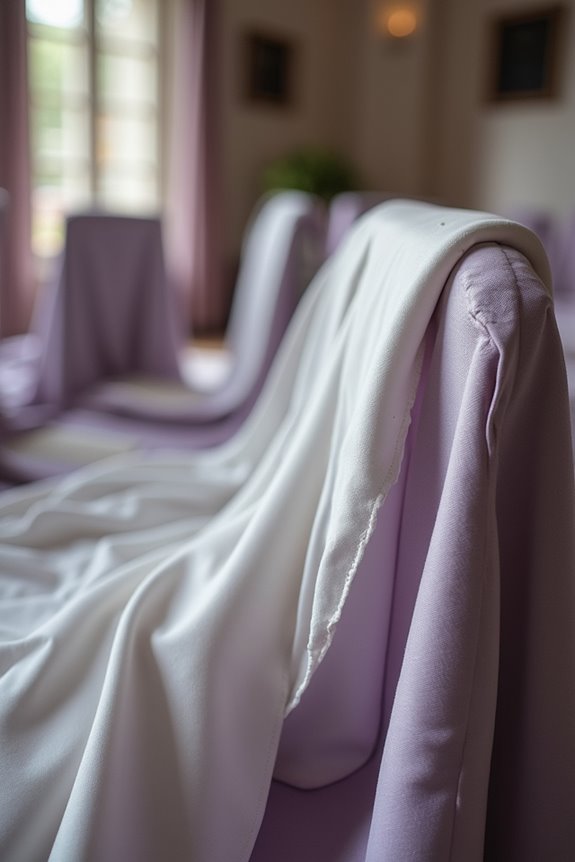
Black isn’t actually the universal mourning color it’s cracked up to be—and that’s where things get interesting. I’ve learned that white serves as the preferred mourning dress for Hindu and Sikh funerals, symbolizing purity and rebirth rather than darkness. Grey and navy offer you dignified alternatives when black feels too restrictive, conveying solemnity without rigid conformity. Purple carries mourning significance in Thailand and Brazil, reflecting regional customs I’d never considered before exploring funeral attire deeply. Here’s what matters most: bright or bold colors generally don’t work unless your specific cultural traditions or the family explicitly endorses them. Rather than assume, I recommend asking directly about color guidance before attending services. Your thoughtfulness in seeking appropriate mourning dress demonstrates respect for the deceased and their community’s traditions.
Religious and Cultural Dress Traditions You Should Know
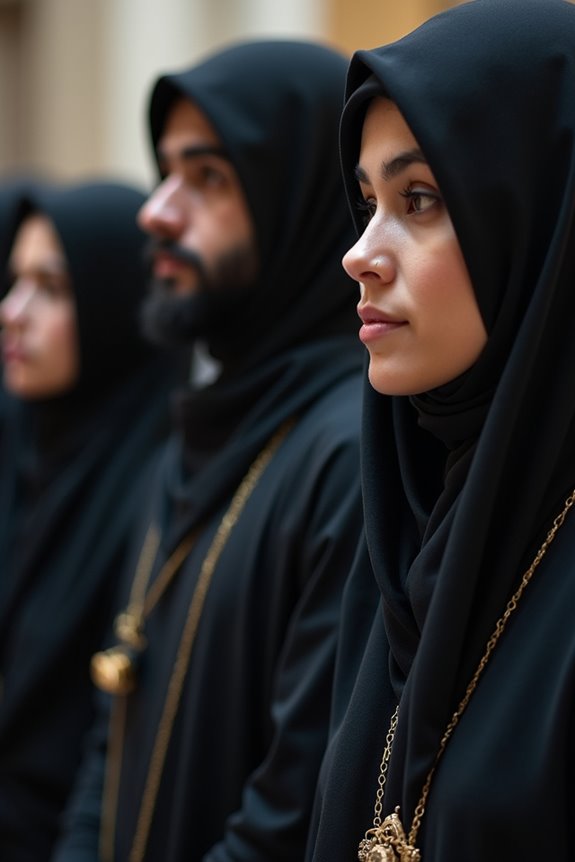
Have you ever considered that what you wear to a funeral might actually contradict the family’s deepest beliefs? I’ve learned that funeral attire varies dramatically across religious and cultural traditions, and honoring these distinctions demonstrates respect and empathy.
Understanding these dress codes helps you participate meaningfully in sacred spaces:
Understanding funeral dress codes allows you to honor sacred spaces and participate with genuine respect and cultural awareness.
- Hindu funerals often require white clothing, symbolizing purity and rebirth rather than mourning
- Sikh ceremonies mandate head coverings for all attendees, reflecting humility before community
- Buddhist services favor simple, dark, unadorned clothing emphasizing spiritual focus
- Indigenous ceremonies may include specific color or pattern significances worthy of your attention
When uncertainty strikes—and it will—contact the family or funeral home directly. This straightforward request shows you care enough to get it right, turning your appearance into a sincere acknowledgment of understanding and respect.
Accessories and Jewelry: Less Is Always More
When I select accessories for a funeral, I keep this principle front and center: restraint isn’t just good taste, it’s respect. You’ll want to coordinate basics like your watch and belt to match your shoes in color and style, creating a unified look that doesn’t draw attention to itself (think quiet elegance, not statement pieces). Beyond these essentials, I’d minimize jewelry to perhaps small earrings or a modest necklace—anything flashy risks becoming a distraction when the focus should remain on honoring the departed.
Jewelry Selection and Restraint
Why do we instinctively dial back our accessories at a funeral? Because restraint speaks louder than sparkle, frankly. I’ve learned that jewelry selection at a service requires deliberate subtlety—we’re honoring loss, not hosting a showcase.
Consider these guidelines for appropriate jewelry:
- A simple watch serves practical purpose without drawing attention
- Small earrings maintain elegance while remaining understated
- A modest necklace offers personal meaning without flash
- Rings should be minimal (wedding band only, ideally)
The principle is straightforward: minimal accessories demonstrate respect. I find that when I embrace this restraint, I actually feel more present—less concerned with how I appear, more focused on supporting grieving family members. That’s the real goal here. Subtle jewelry choices reflect our priorities during someone’s most difficult moments. We belong to something larger than ourselves.
Watch and Belt Coordination
Now that we’ve covered jewelry’s role in funeral etiquette, let’s zoom out and consider the accessories that actually serve a function—your watch and belt. These understated pieces matter more than you’d think. Your belt should match your shoes in both color and style, creating that cohesive, respectful appearance we’re after. A black belt with black shoes, brown with brown—it’s straightforward arithmetic. Your watch deserves similar attention; keep it simple and classic rather than sporty or oversized. This belt coordination principle isn’t arbitrary; it reflects the conservative attire standards that funerals demand. Together, these accessories demonstrate you’ve considered funeral attire etiquette thoughtfully. They’re functional, yes, but they’re also silent statements about respect. Choose pieces that fade into the background, letting your presence—not your accessories—speak volumes.
Avoiding Distracting Accessories
Have you ever noticed how a single oversized bracelet can somehow become the main event at a funeral service? I’ve learned that restraint matters here. Your formal attire deserves jewelry and accessories that enhance, not hijack, the moment.
Consider these guidelines for understated elegance:
- Wear modest jewelry—a simple watch, small earrings, or delicate necklace
- Skip flashy pieces that draw attention away from honoring the deceased
- Keep accessories minimal and subdued in color and style
- Limit children’s accessories to understated items paired with simple outfits
The principle’s straightforward: we’re attending to pay respects, not showcase our collections. Subdued accessories communicate respect and belonging within the community gathered there. You’ll find that choosing minimal, refined pieces actually strengthens your presence—paradoxically, saying less says more.
Dressing for Hot, Cold, and Unpredictable Weather
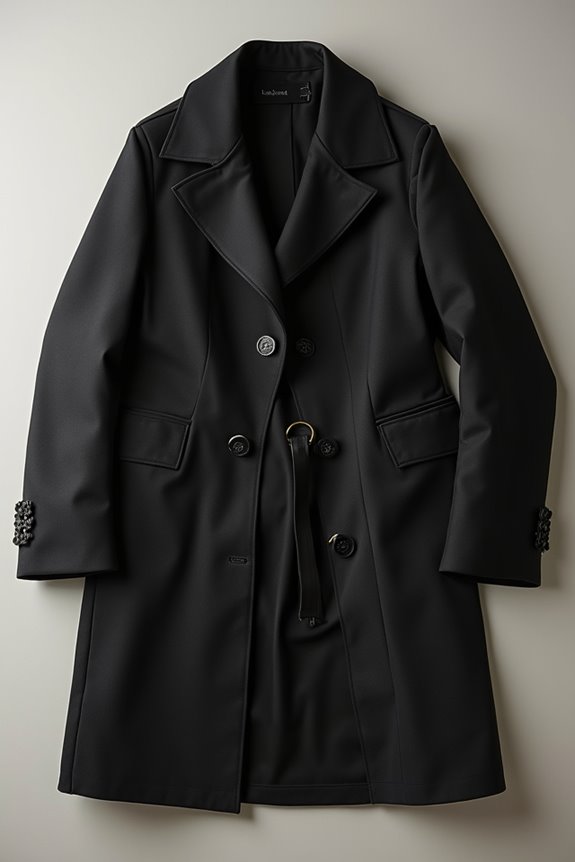
How you’ll navigate the elements while maintaining funeral attire depends less on meteorological whimsy and more on strategic fabric and layer choices. In summer heat, I’d recommend lightweight wool-blends or linen blends in dark colours—black remains your safest bet. You can remove your jacket if temperatures spike unbearably, provided your shirt and tie stay put (formality doesn’t take heat breaks). Winter demands warmth layers: a wool overcoat, scarf, and gloves transform you into a respectfully bundled mourner. For unpredictable weather, I’ve found waterproof dress shoes and an umbrella necessary—cemetery grounds turn treacherous when wet. The formula’s straightforward: prioritize dark, conservative pieces that shield you from both elements and distraction. Weather adapts; your solemnity shouldn’t.
Non-Traditional and Celebration-of-Life Services
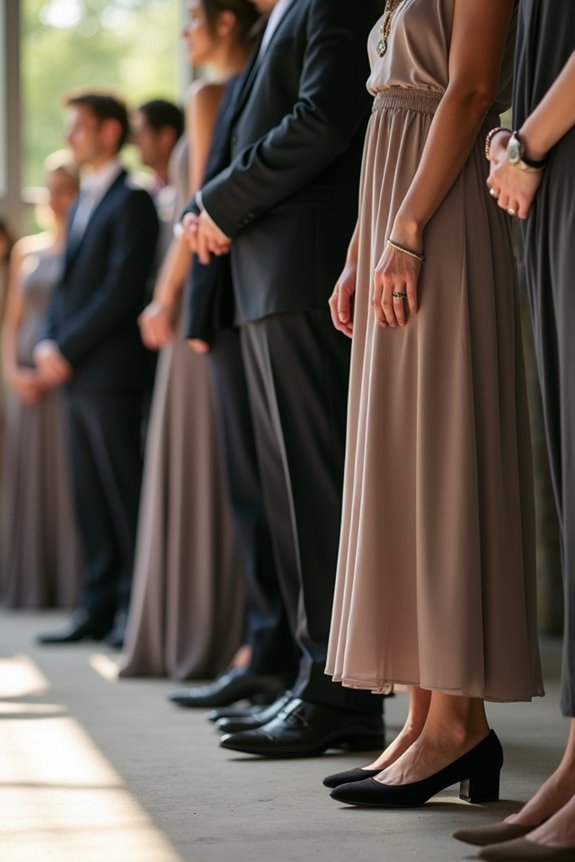
What if the funeral you’re attending celebrates the deceased’s passions rather than adheres to convention? Non-traditional services invite personalization while maintaining respect. I’ve found that honoring someone’s life authentically—whether they loved baseball or gardening—creates meaningful connection among mourners.
Here’s how to navigate celebration-of-life attire:
- Start with a formal foundation (dark suit or dressy outfit)
- Subtly incorporate favorite colors through ties, shirts, or accessories
- Consider themed elements like team jerseys only with explicit family approval
- Avoid neon shades, revealing clothing, or excessive accessories
The dress code here prioritizes comfort and personal expression without sacrificing dignity. Your attire should support the grieving process while celebrating who they were. When uncertain, ask the family directly—they’ll appreciate your consideration, and you’ll feel prepared honoring both tradition and individuality.
What Not to Wear at Any Funeral
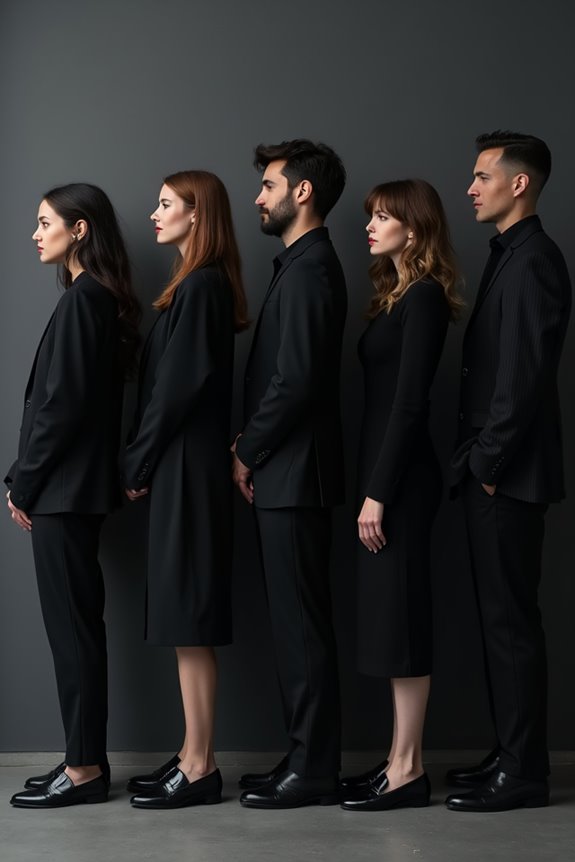
I’ve learned that certain clothing choices—jeans, trainers, and casual wear—simply don’t align with funeral etiquette, regardless of how comfortable they might feel. Bright colors, bold patterns, and flashy jewelry risk pulling attention toward you rather than honoring the deceased (a fate worse than uncomfortable dress shoes, frankly). Similarly, inappropriate footwear like flip-flops or sneakers undermines the solemnity of the occasion, making it clear that deliberate dressing matters when showing respect.
Casual Clothing and Jeans
Why do we still see people showing up to funerals in jeans and sneakers? I think it comes down to comfort, though that’s precisely what we should reconsider. Funeral attire demands respect for the occasion, and casual clothing simply doesn’t communicate that sentiment.
Here’s what I’d avoid:
- Denim of any kind—jeans undermine the solemnity we’re aiming for
- Trainers, sneakers, or flip-flops—choose closed-toe dress shoes instead
- Casual t-shirts or graphic logos—opt for plain, modest blouses or sweaters
- Bright colors or bold patterns—stick with conservative, neutral tones
Modesty matters here. I understand the impulse toward comfort, but funeral attire reflects our respect for the deceased and grieving family. Appropriate footwear and conservative dress aren’t about pretense; they’re about belonging to a community that honors difficult moments with dignity.
Bright Colors and Patterns
While you might think a splash of color could honor the deceased’s vibrant personality, bright hues and bold patterns actually work against the solemn atmosphere a funeral demands. I’ve observed that neon shades, graphic prints, and highly saturated colors distract mourners from reflection and remembrance. Your funeral attire should whisper, not shout.
Dark, neutral tones—blacks, grays, navy—communicate respect and restraint. If you’re drawn to color, keep it subtle and tasteful. A muted burgundy tie or modest jewel-toned scarf might work (with family approval).
The exception? Celebration-of-life services occasionally permit richer colors, though still within an understated framework. Even then, let the family’s preferences guide your choices. Think of your dress code as honoring shared grief rather than expressing individual style—a small but meaningful distinction.
Inappropriate Footwear Choices
Your shoes deserve as much attention as your suit or dress, yet they’re often where people’s funeral etiquette unravels. I’ve noticed that inappropriate footwear choices undermine even the most thoughtfully assembled conservative dress. Here’s what you’ll want to avoid:
- Trainers, sneakers, and athletic shoes—no matter how pristine
- Sandals, flip-flops, or any open-toe styles
- Visibly worn shoes with scuffs or deteriorating soles
- Casual footwear like loafers or boat shoes
Your formal footwear should be closed-toe dress shoes or flats in dark colors—clean and well-maintained. This footwear etiquette isn’t arbitrary; it reflects respect for the grieving family and the solemnity of the occasion. Worn shoes send an unintended message, even if that’s not your intention. Choose funeral attire that includes shoes worthy of standing beside someone during their most difficult moment.
What If You Don’t Own Formal Clothes?
Perhaps you’ve received unexpected news about a funeral, and your closet’s most formal item is a blazer you wore to a job interview three years ago—I get it, and you’re not alone. You have solid options at reasonable cost. Renting a suit or conservative dress from formal wear shops eliminates guesswork entirely. Budget-conscious shoppers find quality funeral attire at department stores, outlet malls, or online retailers during sales. Last-minute? Pair that blazer with matching dark pants and a white shirt. The key is prioritizing fit and modesty—shoulders covered, knee-length garments, minimal jewelry. Think of formal clothing as an investment: one versatile dark suit or dress pays dividends across multiple solemn occasions. You’ll look appropriately respectful without financial strain or wardrobe regret.
Making Last-Minute Adjustments: A Quick Check
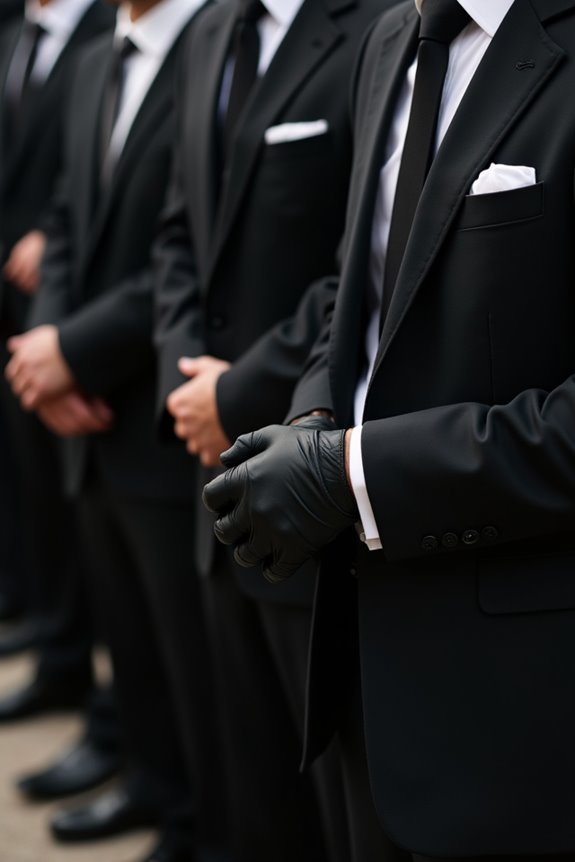
How do you know if what you’re wearing actually works? I’ve found that a quick reality check prevents awkward moments at the service. Before heading out, assess your funeral attire against these essentials:
- Dark clothing dominates your outfit (black, navy, or charcoal)
- Nothing’s too shiny, patterned, or attention-grabbing
- Your shoes match the formality level and season appropriately
- Layers accommodate the venue’s temperature without compromising conservatism
Consider the season too—heavier fabrics in winter, lighter wool blends in summer—while maintaining that serious dress code. Last-minute adjustments often involve swapping jewelry or ditching that bold scarf. The goal isn’t perfection; it’s showing respect through appropriately subdued choices.
Final Thoughts on Respectful Funeral Attire
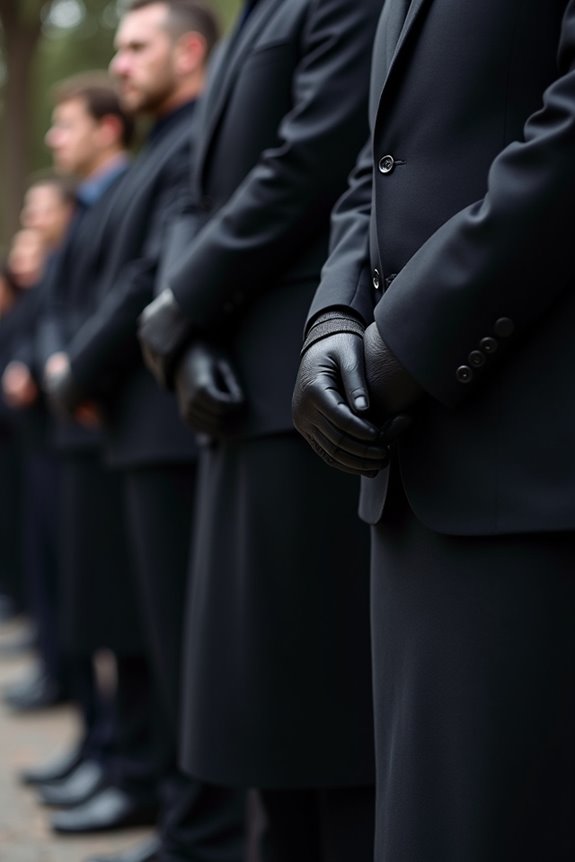
When it comes down to it, funeral attire isn’t really about fashion—it’s about communicating something fundamental through your clothing choices. You’re saying, “I respect this moment, this person, and everyone gathered here.” That’s meaningful.
Funeral attire communicates respect for the moment, the person, and everyone gathered—that’s what truly matters.
The dress code fundamentals I’ve outlined—dark colors, conservative cuts, minimal accessories—aren’t arbitrary rules. They’ve evolved because they work. They let you fade into the background while honoring what matters most.
Remember seasonality matters; a wool-blend in winter shows thoughtfulness. Your accessories? Keep them understated (your grandmother’s pearls, not your entire jewelry box). These choices demonstrate you’ve considered the occasion.
Respectful funeral attire means showing up prepared, authentic, and present.