There’s no need to mention designer labels in conference attire—it’s about removing mental friction so you can concentrate on networking. I’d begin by pinpointing your dress code (formal, business casual, or smart casual), then assemble a five-piece capsule centered on navy and charcoal basics with interchangeable pieces. This approach lets you generate multiple outfits from minimal luggage while maintaining a professional presence throughout day-to-night transitions. When your clothes fit well and align with venue expectations, confidence naturally follows. There’s substantially more strategy involved in looking composed and appropriate.
Start by Understanding Your Dress Code
How’s this for a conference reality: you’ve registered, marked your calendar, and now you’re staring at your closet wondering if that blazer from 2019 still counts as business casual. Before you panic, here’s my approach: I research the conference dress code expectations immediately. This single step reduces wardrobe anxiety.
I’ve learned that dress codes vary significantly—formal, casual, smart casual—and identifying where your event falls matters tremendously. When I’m uncertain, I overdress rather than underdress (a lesson learned the hard way). I also hunt for event-specific guidelines or themes that might influence color and style choices.
Your conference attire should reflect both the venue and your session schedule, allowing you to move comfortably between networking events and presentations. Understanding these expectations upfront isn’t just practical; it’s freeing.
Business Formal: The Polished Professional Look
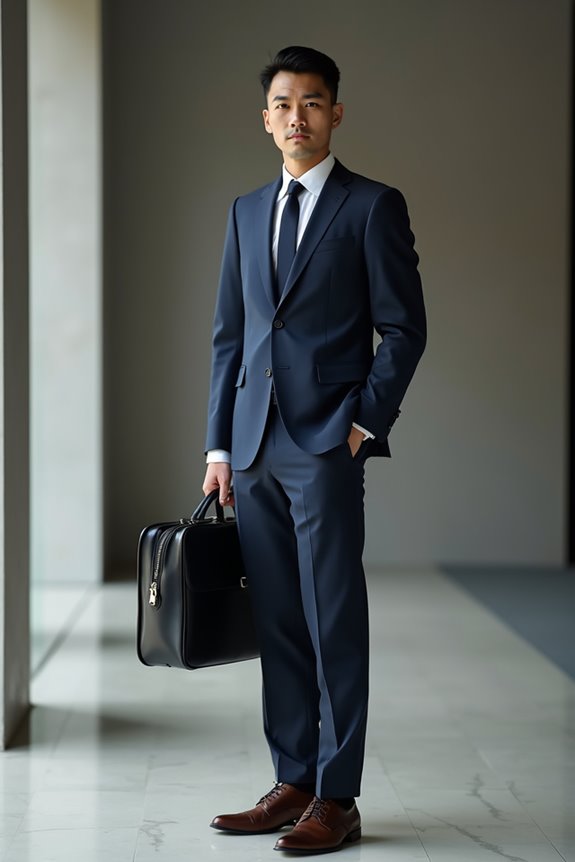
When’s business formal actually necessary at a conference? You’ll want this look for keynote presentations, formal dinners, and client meetings. I’ve found that mastering this aesthetic signals you’re serious about making connections.
Master business formal for keynote presentations, formal dinners, and client meetings to signal you’re serious about making professional connections.
Here’s what I recommend:
- Core foundation – A dark, well-tailored suit paired with a crisp white or light blue dress shirt creates a sharp foundation
- Strategic accessories – Layer in a burgundy silk tie, brown leather dress shoes with matching belt, and a white pocket square for that traditional edge
- Practical packing – Bring one dress shirt per day plus extras for travel mishaps
French cuff shirts elevate your formality slightly higher than barrel cuffs. The goal? You’ll project credibility and meticulous attention to detail—visually confirming you belong in that boardroom.
Business Casual: The Versatile Middle Ground
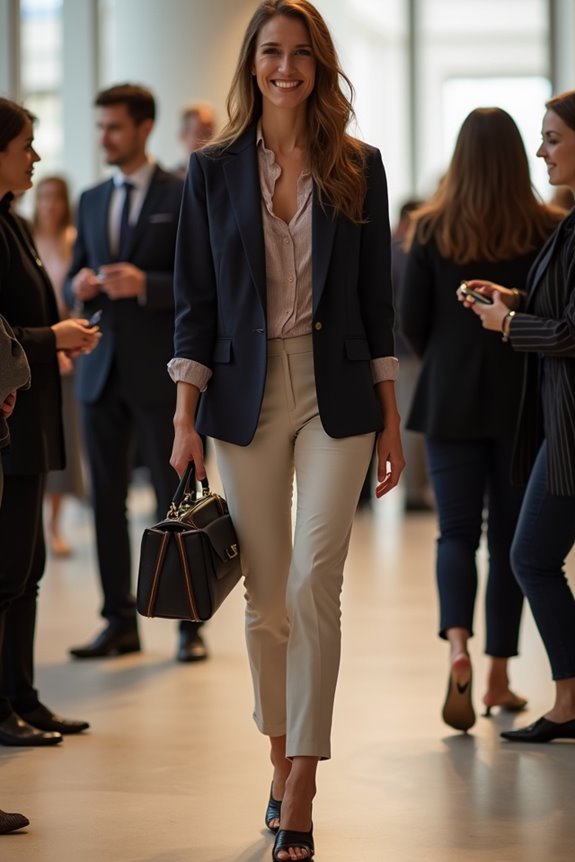
I’ve found that a quality blazer serves as your conference’s ultimate Swiss Army knife—it elevates a casual shirt-and-chino combo while staying approachable enough that you won’t intimidate the person next to you at the coffee station. Where business casual really shines, though, is in the freedom to layer patterns and textures: imagine a charcoal blazer over a subtle striped dress shirt paired with textured chinos, or a linen blazer (yes, even at conferences) with a patterned polo that hints at personality without screaming “I tried too hard.” The trick I’ve learned is treating these pieces like building blocks rather than rigid rules, letting fabric weight and color contrast work together so you look considered without looking exhausted by your outfit choices.
The Perfect Blazer Foundation
Why does a single blazer matter more than you’d think at a conference? Because it’s your professional shortcut to belonging. I’ve found that a quality blazer foundation shifts how colleagues perceive you—and frankly, how you perceive yourself.
Here’s what makes this work:
- Color choice: Navy or charcoal blazers offer unmatched versatility across multiple days
- Fabric selection: Wrinkle-resistant materials keep you looking sharp without constant maintenance
- Fit flexibility: Structured or unstructured options accommodate different body types and comfort preferences
Pair your blazer with white or light blue dress shirts, neutral trousers, and polished shoes. Pack backup shirts (this matters). The blazer becomes your reliable anchor—approachable yet authoritative. You’re not overdressed or underdressed; you’re exactly right. That’s the sweet spot where you’ll feel like you actually belong in that room.
Mixing Patterns And Textures
Business casual strikes that goldilocks zone where you’ve got actual flexibility—and that’s where patterns and textures become your covert edge. I’ve found that layering a patterned shirt beneath your blazer signals intentionality without screaming for attention. Stripes, dots, or subtle checks work brilliantly because they add visual interest while keeping things grounded. The texture aspect matters equally: a wool knit tie or linen option introduces dimension that solid neutrals simply can’t match. Pair a charcoal blazer with that light blue patterned shirt and navy chinos, and you’re not just dressed—you’re communicating. Details like textured pockets or a printed belt whisper personality into your professional presence. You’re blending comfort with polish, letting your outfit say you belong here (and actually thought about it).
Smart Casual: Comfort Meets Professionalism
How do you strike that balance between looking intentional and feeling comfortable at a professional event?
Smart casual is your answer. This approach creates an appropriate professional image for conferences—relaxed yet deliberate. Here’s what works:
- Foundation pieces: Chinos with a casual blazer or khakis paired with a sweater establish refinement without formality.
- Shirt alternatives: A long-sleeve polo or patterned dress shirt works well in place of formal button-downs, offering flexibility across your day’s events.
- Footwear finesse: Clean leather sneakers, loafers, or dress shoes ground your outfit while maintaining comfort during long conference days.
Minimal accessories and grooming complete the look. You’ll project confidence and approachability—exactly what networking requires. Smart casual isn’t compromise; it’s strategy.
Build Your Five-Piece Capsule Wardrobe
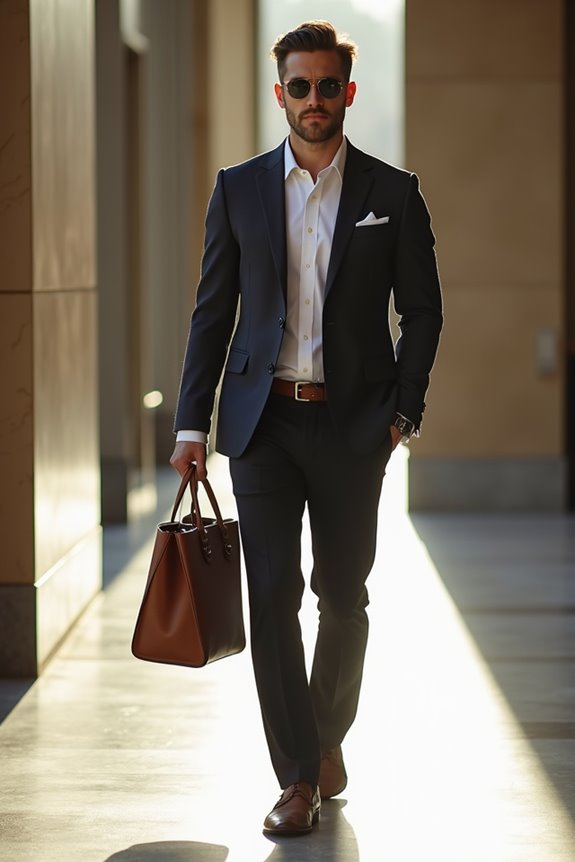
I’ll build my five-piece capsule around navy and charcoal—colors that’ve anchored professional wardrobes since, well, forever—because they’re forgiving travel companions and naturally coordinate without requiring a color-theory degree. The foundation piece is a packable blazer (structured or relaxed, your call), paired with white and light blue dress shirts that’ll take me from boardroom to happy hour, while neutral trousers in navy, charcoal, or khaki handle the heavy lifting of mix-and-match versatility. Wrinkle-resistant fabrics and a spare shirt or two stuffed in my carry-on aren’t glamorous, but they’re practical necessities that distinguish between looking composed and looking like I’ve been living in an airport—a distinction that matters when you’re networking all day.
Essential Pieces Foundation
Why do successful conference attendees look well-coordinated while others seem perpetually frazzled? They’ve mastered the five-piece foundation—and you can too.
I’ve found that building around two or three core colors eliminates decision fatigue entirely. Here’s your essential starting point:
- A tailored blazer in navy or charcoal (packable, naturally) that anchors every outfit
- Neutral dress pants in matching tones for seamless combinations
- White and light blue dress shirts with proper collar and sleeve lengths
Layering and repetition do the work. Wrinkle-resistant fabrics become your silent allies during travel days, while backup shirts handle marathon schedules without panic. This approach transforms mornings from stressful into strategic—you’re simply mixing proven pieces rather than inventing outfits.
Belonging at your next conference starts with this foundation.
Mix-And-Match Versatility
Now that you’ve got your foundation pieces in place, the real impact happens when you stop treating them as separate items and start treating them as a system. Your navy blazer pairs seamlessly with both dress trousers and that crisp white shirt—creating multiple conference-ready looks without duplicating outfits. Layer your lightweight cardigan over the same shirt, and suddenly you’ve shifted the aesthetic entirely. This mix-and-match approach means you’re not frantically hunting for matching pieces during your stay. The 3-Color Rule maintains cohesion: navy, white, and one neutral accent color harmonize across everything. You’ll notice professionals have leveraged this strategy for decades because it works. You’re not just packing clothes; you’re building a reliable wardrobe system that handles whatever your conference schedule demands.
Strategic Color Selection
How you choose your core colors—that’s where the entire capsule wardrobe either clicks into place or falls apart. I’ve learned that strategic color selection isn’t about personal preference; it’s about creating professional currency across conference settings.
Here’s what actually works:
- Blues as your primary choice—they’re linked to trust and competence, making them ideal for conveying credibility in formal environments
- A neutral color like navy or charcoal that anchors everything else and pairs with dress shirts
- An accent shade (greens work well for approachability) that prevents monotony without sacrificing cohesion
The 3 Color Rule keeps mixing and matching straightforward. You’re not reinventing yourself daily; you’re strategically stacking pieces that communicate professionalism while maintaining versatility across casual networking and formal presentations alike.
Apply the 3-Color Rule for Easy Mixing
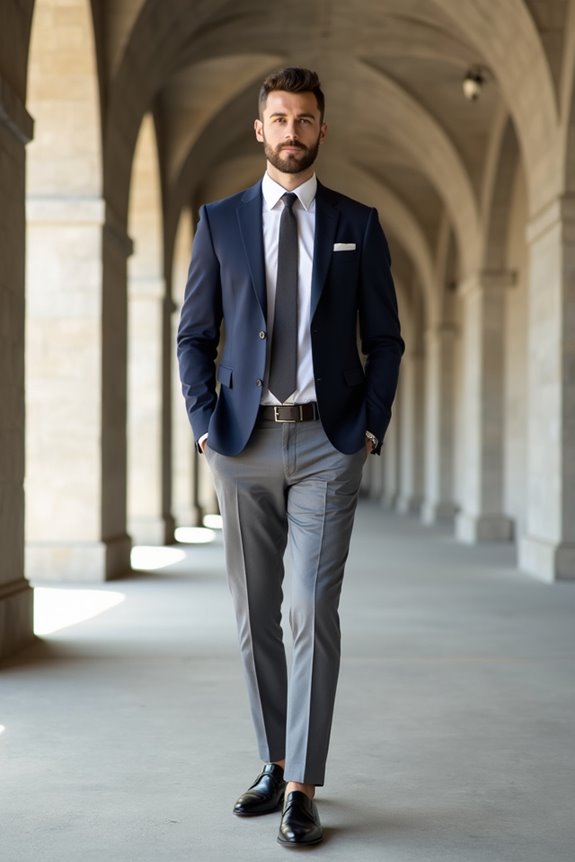
When you’re packing for a conference, here’s a truth that’ll save you both luggage space and decision fatigue: limiting yourself to just two or three core colors creates a cohesive, mix-and-match wardrobe. I’d recommend anchoring around navy, charcoal, or khaki—neutrals that pair well with lighter accents like white or crisp blue shirts. This 3-color rule isn’t restrictive; it’s practical. You’ll discover that five pieces create fifteen outfit combinations. Layering scarves, belts, or pocket squares introduces subtle personality without disrupting your palette. The advantage? You’ll navigate formal dinners, business casual sessions, and networking events wearing the same foundation—just styled differently. Packing light becomes manageable when you’re working within this framework.
Choose Comfortable Footwear for Long Days
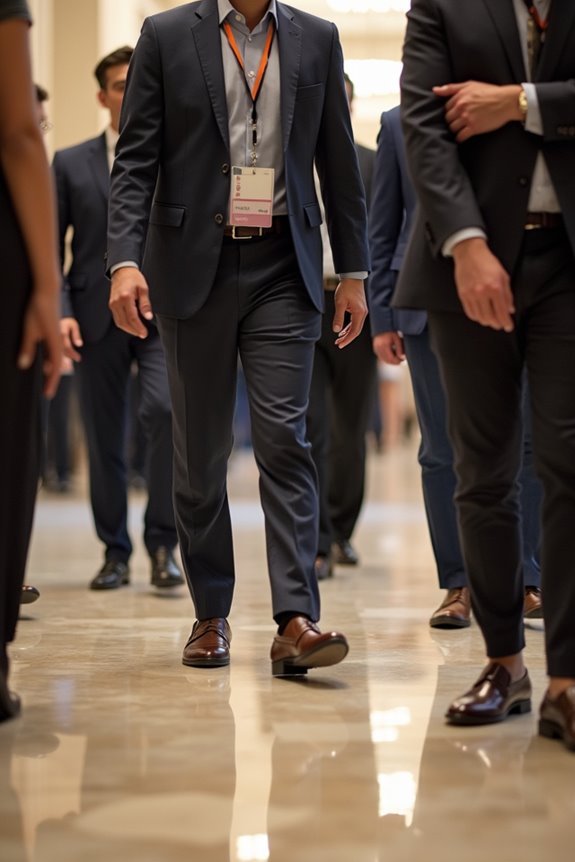
Your feet will stage a quiet rebellion if you don’t equip them properly for a conference day.
I’ve learned that comfortable footwear makes a real difference between networking confidently and limping toward the exit. Here’s what I prioritize:
- Cushioned insoles and breathable materials that reduce fatigue during marathon sessions and hallway sprints
- Versatile styles—dress flats, loafers, or modest heels—that pair seamlessly with professional outfits while remaining walkable
- Non-slip soles with arch support for crowded venues and extended standing periods
All-day comfort matters when you’re navigating multiple sessions. I break in new shoes beforehand (seriously, do this) and pack a backup pair for evening events when my feet demand mercy. Balance style with practicality—your shoes should complement your outfit while accommodating potential swelling. Because nothing undermines your professional presence quite like wincing with every step.
Select Jewelry, Watches, and Bags That Enhance Your Look
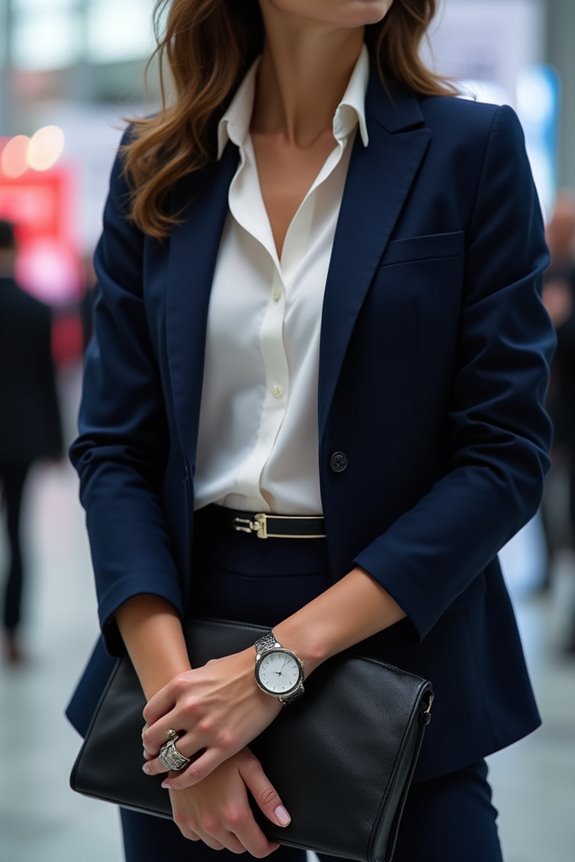
I’ve found that building a conference wardrobe hinges on mastering two complementary strategies: anchoring your look with timeless pieces like a quality watch or simple gold earrings that work with virtually everything, and then—here’s where it gets fun—strategically deploying one bold accessory (think a structured leather bag or statement bracelet) to inject personality without derailing the whole outfit. The real trick is knowing when to let your classic foundation do the heavy lifting and when a standout piece can elevate an otherwise neutral ensemble, because showing up in all statement jewelry is about as balanced as wearing three different prints to a business meeting. I’ve learned that the best-dressed conference attendees aren’t necessarily the ones with the fanciest accessories; they’re the ones who’ve figured out how to layer restraint with intention.
Classic Pieces For Versatility
How do you build a conference wardrobe that doesn’t scream “I bought this outfit yesterday”? The answer lies in classic pieces that work harder than you do. I’ve found that investing in versatile accessories creates a professional foundation that adapts across multiple settings—from morning panels to evening networking.
Here’s what I prioritize:
- Subtle jewelry and watches that complement rather than compete (think classic metal bracelets, understated tie bars)
- Neutral-toned bags—a structured briefcase or medium tote—that anchor any outfit while carrying essentials
- Color-coordinated accents like pocket squares that create cohesion without overthinking
These pieces transcend single occasions. That navy blazer pairs with dress shirts for business casual mornings and formal evening events alike. Durable, wrinkle-resistant materials keep you looking sharp throughout long conference days, proving that professional versatility isn’t accidental—it’s strategic.
Statement Accessories For Impact
When’s the last time a single accessory improved an entire outfit? That’s the power of statement accessories at conferences. I’ve learned that a metallic watch or sleek cufflink set elevates a polished appearance without demanding attention—important in conservative industries. The trick? Balance one bold piece (think a textured clutch or standout bracelet) with smaller complementary items, avoiding competing focal points.
Material and color coordination matter enormously. I select metals—silver, gold, rose gold—that harmonize with my outfit’s tones, sidestepping flashy finishes. For longevity through marathon conference days, I prioritize wrinkle-resistant bags and durable watch straps.
Here’s what I’ve discovered: statement accessories aren’t about dominating the room. They’re about projecting competence and intentionality, signaling you’ve considered every detail.
Layer Strategically for Different Conference Spaces
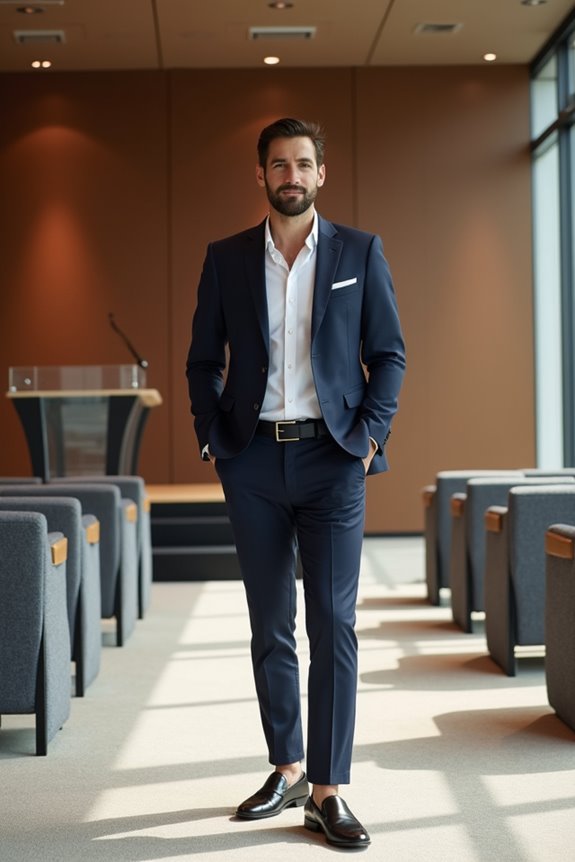
Why do conference rooms feel like they’re operating on different climate systems? I’ve learned that layered outfits aren’t just stylish—they’re a practical strategy. Your conference wardrobe should work like a well-orchestrated ensemble:
Conference rooms feel like different climate systems—layered outfits are your practical strategy for seamless transitions and sustained presence.
- Start with breathable bases that wick moisture, then add a structured blazer for polish and authority
- Choose fabrics with stretch and wrinkle resistance (cotton-elastane blends, lightweight wool) so you stay comfortable during marathon sessions
- Build a 3-color foundation using navy, charcoal, and cream, allowing pieces to mix across different spaces
This approach lets you transition seamlessly from morning presentations to evening networking without looking disheveled. When you’re not fighting temperature fluctuations or wrinkles, you’re actually present—engaging meaningfully rather than adjusting your collar. That’s when conference success happens.
Polish Your Appearance: Hair, Nails, and Grooming
You’d be surprised what a fresh haircut does for your conference presence—it’s the foundation of looking like you’ve got your life together. I schedule mine within a week of attending, maintaining that refined, contemporary appearance. Beyond hair, grooming extends to the details: a clean shave or neatly trimmed facial hair signals intentionality, while clean, well-kept nails communicate respect for the spaces you’ll occupy. I keep a lint roller handy (unglamorous but practical) for those inevitable dust particles that betray otherwise careful preparation. Subtle fragrance matters too—if you wear cologne or perfume, restraint works best. These grooming fundamentals aren’t vanity; they’re practical investments in how people perceive your professionalism and credibility before you’ve spoken a word.
Pack Interchangeable Outfits to Minimize Luggage
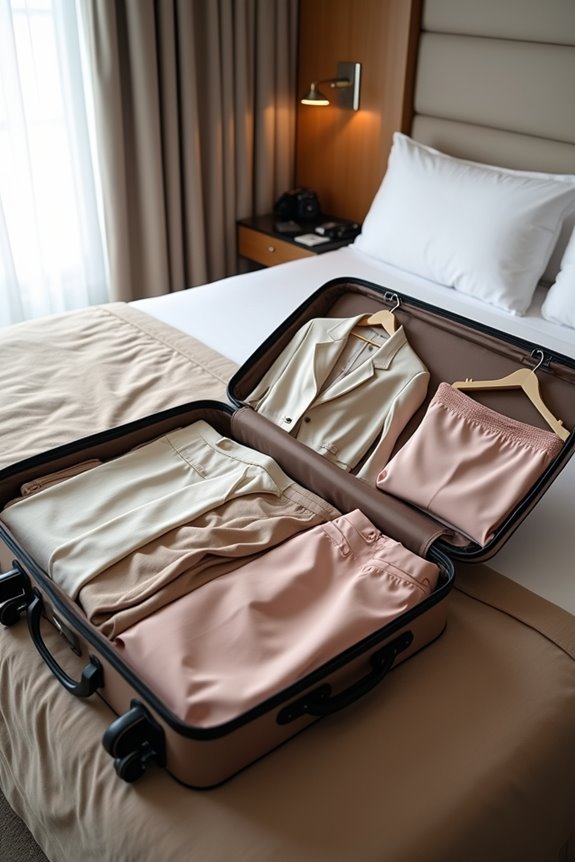
Packing for a conference doesn’t require hauling an entire wardrobe—a strategic capsule approach does the heavy lifting instead. I’ve learned that building interchangeable outfits around three core colors creates endless combinations without overstuffing my luggage.
Here’s my winning formula:
- Select a 3-color palette (navy, charcoal, neutral) and build everything around it for seamless mixing
- Choose wrinkle-resistant fabrics with backup shirts to maintain fresh appearances throughout the conference
- Pack one versatile blazer that transitions from boardroom to evening events
I pair a charcoal blazer with dress pants for morning sessions, then swap in chinos for afternoon networking. Two quality dress shirts—white and light blue—handle multiple days without repetition. This layering strategy keeps my suitcase manageable while maintaining a professional appearance across every interaction.
Transition Seamlessly From Day Sessions to Evening Events

How do you maintain professional polish when your conference day stretches from 8 a.m. keynotes straight through to evening cocktails? Strategic layering allows your look to adapt throughout the day. Start with wrinkle-resistant basics—a quality blouse paired with dress pants—then add a structured blazer for daytime sessions. When evening arrives, simply swap your cardigan for a tailored jacket, increasing formality without changing clothes entirely.
| Time | Base Layer | Jacket | Accessories |
|---|---|---|---|
| Morning | Blouse + Pants | Cardigan | Simple jewelry |
| Afternoon | Same | Blazer | Metallic accents |
| Evening | Same | Tailored Jacket | Dressy scarf |
| Night | Same | Structured Blazer | Statement pieces |
Prioritize sleek flats or low-heeled pumps—comfort matters when you’re networking for hours. Choose 2–3 core colors and add metallic touches strategically to complete your transition to evening. This approach keeps your look professional across the full conference day.
Confidence as Your Most Important Accessory

While strategic layering gets your outfit right, there’s something that no blazer can manufacture: authentic confidence. Your professional appearance matters, sure, but it’s really the foundation for what comes next. Here’s what I’ve noticed works:
No blazer can manufacture authentic confidence—but your polished appearance creates the stage where it performs.
- Dress intentionally – When you choose clothes aligned with conference norms, you’re not just following rules; you’re signaling you belong here.
- Own the mindset shift – That polished outfit triggers something internal. You stand taller, speak clearer, network with more presence (it’s weirdly psychological).
- Reduce friction – Comfortable fabrics and proper fit mean you’re focused on conversations, not adjusting your hem every five minutes.
Your professional appearance creates the stage, but confidence is the performance. They’re inseparable.