

Chelsea boots demand trousers that respect their tapered elegance—think straight-leg, slim-fit, or dark denim that grazes the boot’s neck without bunching. I’d prioritize clean hems over trendy cuts; avoid boot-cut styles that hide your investment. Navy, charcoal, and camel work well across seasons. Success comes when you match proportions: streamlined trousers for streamlined boots. Get the hem length right, skip the cuffing, and you’ve established a solid foundation—though there’s considerably more nuance when you explore each option’s specific strengths.
How to Avoid Common Trouser Mistakes With Chelsea Boots
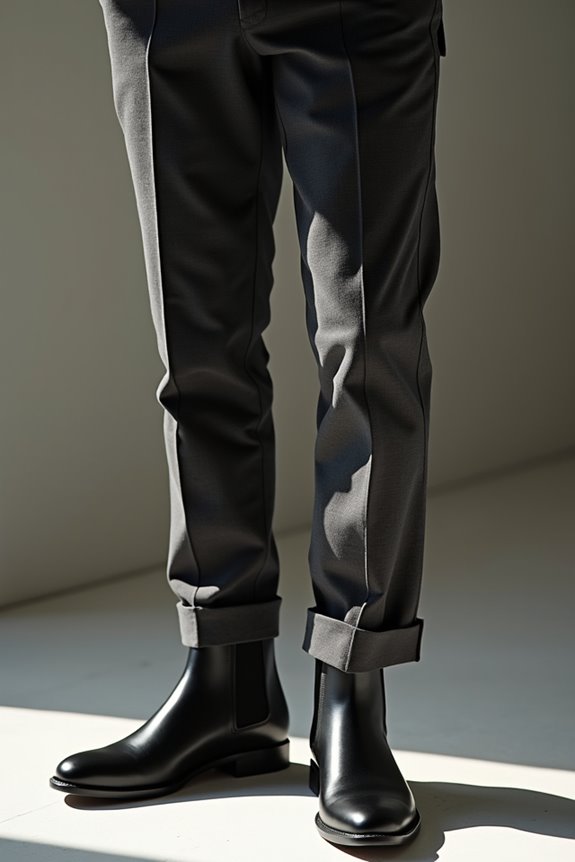
Why do so many otherwise well-dressed people stumble when it comes to pairing trousers with Chelsea boots? I’ve noticed the culprit isn’t complexity—it’s oversight. Your trouser length determines everything. Aim for hems ending at the boot’s top or slightly above it; this prevents that unflattering mid-calf break that swallows the boot’s elegant line. Hem placement matters equally. Never tuck fabric into the boot (bulky stacking ensues), and avoid cuffing too high—you’re not hemming jeans here. Fabric handling requires attention too. Heavier materials like wool demand precision to avoid bunching around the ankle, while lighter fabrics need adequate length to drape properly. These aren’t arbitrary rules; they’re the difference between looking intentional and accidentally sloppy.
Straight-Leg Trousers: The Foundational Choice
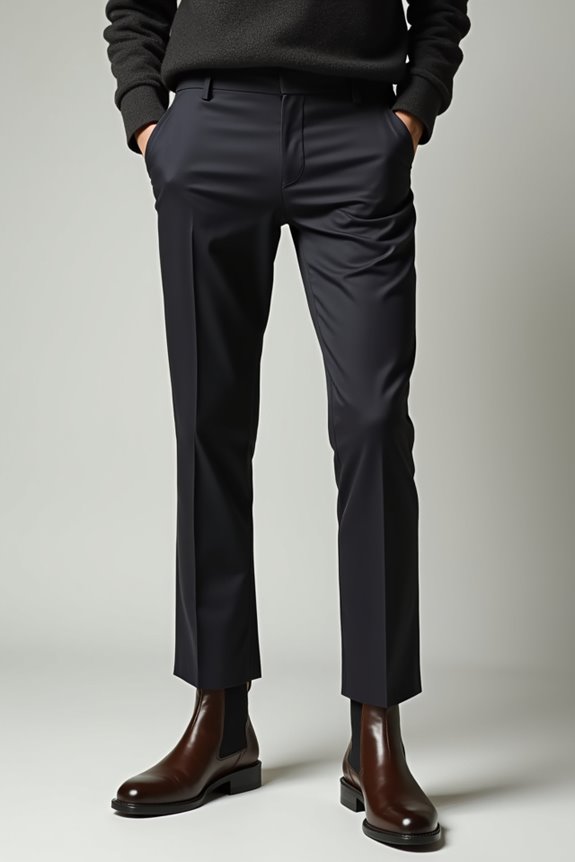
When I first paired straight-leg trousers with Chelsea boots, I realized I’d found a reliable formula—a classic silhouette that works consistently, whether you’re heading to the office or out for the evening. What makes this pairing so effective is its versatility: the same straight cut complements both black and brown boots across formal suits and casual weekend fits, meaning you’re not constantly shopping for new pieces. The details matter—a hem that grazes the boot top and a leg width that avoids bunching creates that refined, intentional appearance that shows you’ve considered your outfit (which, let’s be honest, is half the effort).
Classic Silhouette And Fit
The straight-leg trouser isn’t flashy, but it’s the closest thing we have to a reliable pairing with Chelsea boots—and there’s a reason traditional style keeps circling back to it. I’ve found that this silhouette balance works because straight-leg trousers respect the boot’s inherent elegance without competing for attention. The key lies in hem length: you’ll want that edge resting just at or slightly above the boot shaft, creating an unbroken vertical line that elongates your frame. A slim cut enhances this effect, while wider cuts tend to muddy the waters (and hide those boots you’ve invested in). This foundational approach isn’t revolutionary, but it’s reliable—the diplomatic choice that lets your Chelsea boots do what they do best: command the room with quiet confidence.
Versatility Across Formality Levels
Straight-leg trousers paired with Chelsea boots create a rare wardrobe pairing that transitions from boardroom to brunch. This formal-casual versatility stems from the silhouette’s inherent balance—it refuses to commit exclusively to either end of the spectrum.
Consider these applications:
- Business settings: Pair charcoal or navy straight-leg trousers with slim black calf leather Chelsea boots for sophisticated refinement
- Smart-casual outings: Dark-leaf brown boots with lighter wool trousers offer accessible elegance
- Creative environments: Darker hues maintain professionalism while feeling less rigid
The key lies in respecting hem length—that precise measure just above the boot shaft preserves the clean line that makes these boots work across contexts. You’re not compromising; you’re simply dressing strategically.
Color Pairing Recommendations
How do you actually know which colors work with Chelsea boots? I’ve found that trouser color pairing hinges on creating visual balance. Dark leather Chelsea boots pair well with black, grey, or navy straight-leg trousers—the combination signals professional polish without overstatement. Conversely, lighter options like camel, khaki, or light grey create subtle contrast against darker boots, offering versatility that works from office to weekend. The key is ensuring your straight-leg trousers hit just at the bootneck, neither bunching nor disappearing entirely. This measured approach prevents the common mistake of overthinking color coordination. Match tone-on-tone for formality, contrast for approachability. Either direction works; it’s about being deliberate with your choices.
Slim-Fit Trousers: Clean Lines Without Bulk
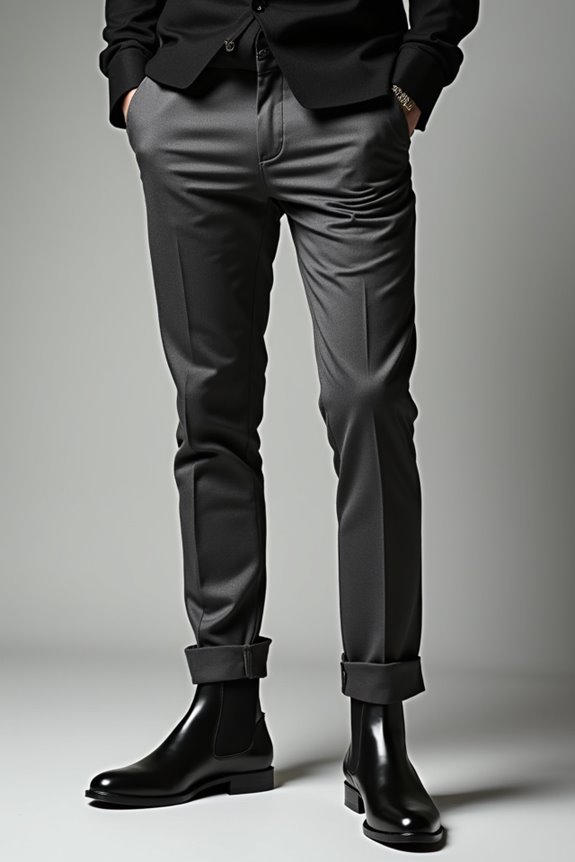
Wondering why slim-fit trousers consistently rank as the standard for Chelsea boot pairings? I’ve found they deliver what wider cuts simply can’t: visual harmony. The clean lines of slim-fit silhouettes complement your boot’s sleek, tapered profile without fighting for attention.
Here’s what makes them work:
- Leg elongation: The streamlined cut visually extends your line, creating a sophisticated appearance
- Seamless transitions: Hem placement just at or slightly over the boot shaft eliminates awkward gaps and bunching
- Versatile polish: They pair equally well with leather and suede, supporting everything from smart-casual to formal settings
The key? Avoid overly tight or cropped versions (that visible gap’s nobody’s friend). Instead, aim for smooth continuity between trouser and boot. That’s when your whole outfit functions at its best.
Dark Denim: Casual Confidence Year-Round
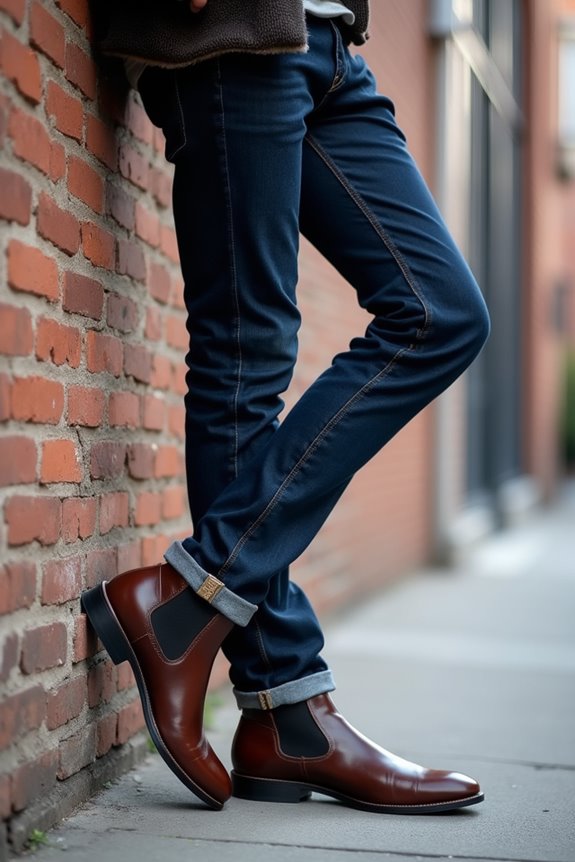
Dark denim’s staying power with Chelsea boots comes down to something beautifully simple: it works. I’ve found that this pairing bridges your casual-smart wardrobe without friction, creating looks that transition from weekend errands to dinner plans without skipping a beat.
The right fit matters. Skinny jeans should sit snug at the boot top with minimal bunching, while straight-leg cuts graze the boot perfectly when hemmed correctly. Avoid boot-cut denim—it hides what makes Chelsea boots beautiful in the first place.
Color-wise, dark denim pairs seamlessly with brown or black leather Chelsea boots alike. The textured aesthetic feels relaxed yet deliberate, whether you’re wearing suede in darker hues or polished leather. That’s casual confidence, year-round.
Denim Colors Beyond Black: Navigating Light and Mid Washes
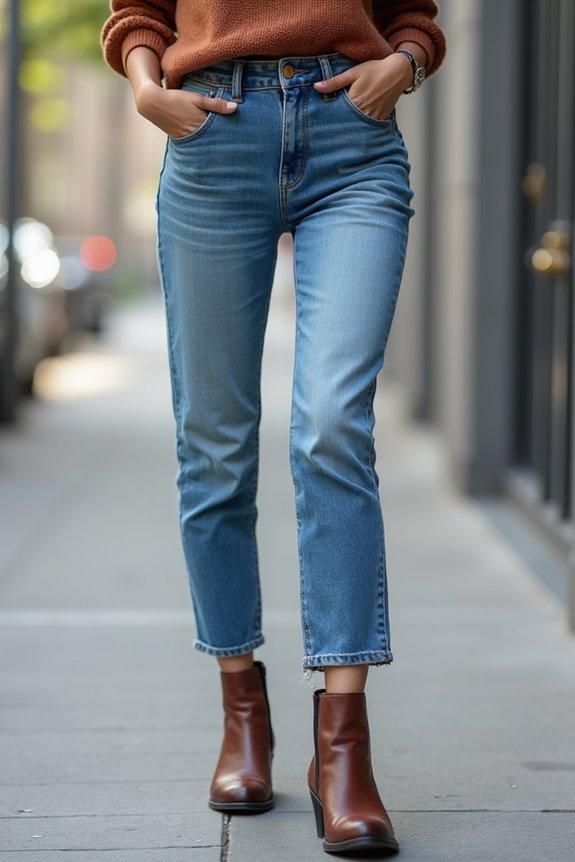
Once you’ve mastered dark denim’s reliable appeal, the real styling challenge—and opportunity—lies in navigating lighter washes, which demand more deliberate pairing choices but offer greater versatility. Light and mid-wash denims create a more casual foundation than their darker cousins, meaning you’ll want to match them with brown or olive Chelsea boots rather than formal black leather (very light washes with sleek black boots tend to undermine the dressed-up aesthetic). The approach I’ve found most useful? Stick with true blue mid-tones for that classic, lasting look, keep your hem grazing the boot shaft for clean silhouette definition, and remember that seasonal shade selection—warmer tones in transitional months, cooler blues year-round—keeps your boot-and-denim pairing feeling deliberate rather than random.
Light Wash Denim Styling
Most people assume Chelsea boots demand dark denim—a safe choice, certainly, but one that ignores the striking visual possibilities that lighter washes offer. I’ve found that light wash denim styling creates compelling contrast when paired thoughtfully with Chelsea boots.
Here’s what I recommend:
- Pair with darker accessories: Opt for darker belts and tops to prevent your outfit from looking washed out (it matters more than you’d think)
- Choose the right fit: Straight-leg or slim-tapered cuts ending at the boot’s top create that streamlined silhouette we’re after
- Wear over the boot: Position heavier-weight denim over the shaft with a clean hem rather than tucking in
The result? A refined, high-contrast look that feels composed while keeping you firmly in the style-conscious crowd.
Mid-Tone Color Pairing Guide
Where does the real styling happen with Chelsea boots? In mid-tone denim. Classic indigo and mid-wash blues create the perfect balance—they complement rather than compete with your footwear. Pair these with black or dark leather Chelsea boots for sophisticated contrast, or go warmer with chocolate and mocha tones for a casual approach.
Your pairing guide should account for context. Mid-tone blues work well in professional settings when matched with gray suits and black calf leather boots—it’s office-appropriate without feeling stiff. Avoid those pale, desaturated mid-tones with sleek black Chelsea boots; they’ll look washed out.
A final tip: cuff or crop those hems to showcase your boots. Clean silhouettes matter.
Seasonal Denim Shade Selection
How do you navigate the wash spectrum without defaulting to black every season? Strategic denim-wash pairings with Chelsea boots work effectively.
Boot color coordination hinges on understanding contrast. Here’s what works:
- Dark boots with light washes: Black or dark-leaf Chelsea boots stand out against stone or light-blue denim, creating that crisp winter-to-spring transition
- Brown boots with mid-tones: Tan and brown leather naturally complement lighter mid-washes, offering casual spring options
- Indigo versatility: Dark blue denim pairs naturally with black calf leather, maintaining formality while avoiding monotony
The practical consideration? Hem length matters more than denim shades. Straight or slim cuts create clean lines; cropped or wide hems showcase your boot investment. By experimenting with denim shades beyond basics, you’ll develop your signature look—without overthinking it.
Chinos: From Neutral Classics to Bold Statements
Why do chinos deserve a spot in your Chelsea boot rotation? They’re the smart-casual powerhouse that bridges casual and formal wear—something jeans simply can’t manage. I’ve found that color pairing is where chinos work well. Black chinos with black Chelsea boots create that sleek, streamlined look. Blue chinos, however, demand darker boots (think Godfrey D in Dark Leaf) for refined contrast. Camel pairs beautifully with suede for that rugged, country-inspired vibe. Even lighter, pale-toned chinos work well with grain leather boots, conveying understated luxury. The benefit? Chinos offer flexibility that jeans won’t—you’re not just dressing casually; you’re dressing with purpose. That’s what matters.
Tailored Business Trousers: Professional Polish
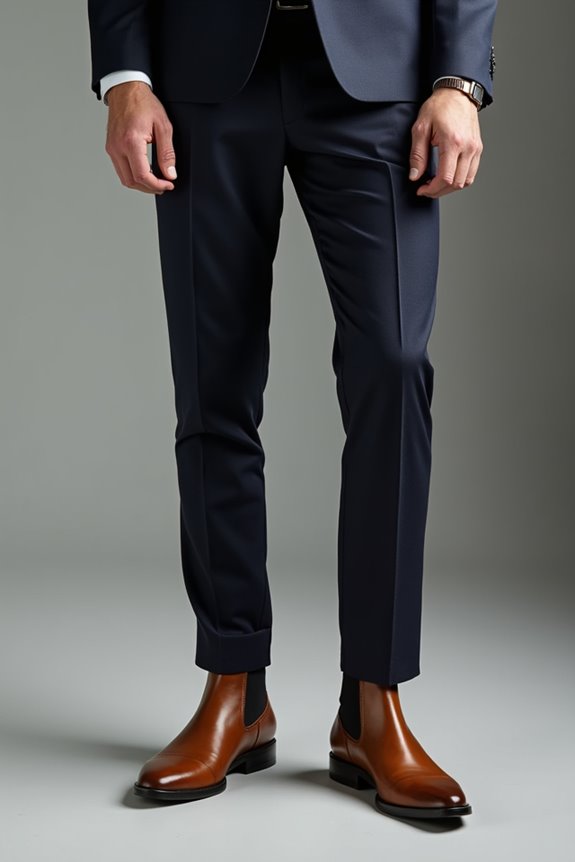
The shift from casual to corporate demands more than just swapping fabrics—it requires Chelsea boots that understand ambition. When you’re ready to elevate your wardrobe, tailored slacks become your foundation for a professional appearance.
I’ve found that three key elements work together:
- Slim trouser silhouettes in black, grey, or navy create that streamlined aesthetic without sacrificing sophistication
- Proper hem length—just above the boot collar—prevents awkward bunching that undermines your entire outfit
- Quality tailoring keeps your boot silhouette as the focal point, not a casualty of poorly fitted fabric
Avoid boot-cut trousers; they’ll swallow your Chelsea boots whole. Instead, pair tailored slacks with a blazer and crisp shirt for semi-formal events. This combination conveys confidence while your boots remain the statement piece.
Color Coordination for Business: Beyond Black and Grey

While mastering the fit of your tailored slacks matters enormously, what shapes a business look is understanding how color works with your Chelsea boots. Moving past black and grey expands your options for professional dressing. Pairing brown Chelsea boots with navy or charcoal suits creates that polished, work-ready aesthetic without feeling predictable. Consider charcoal as a reliable choice—it bridges formality and versatility effectively.
| Suit Color | Boot Choice |
|---|---|
| Navy | Dark brown or chestnut |
| Charcoal | Black calf leather |
| Brown | Mocha calf leather |
| Grey | Dark brown contrast |
| Charcoal | Dark-leaf calf |
Strong color pairing combinations develop your professional presence. Burgundy boots? Skip those for conservative settings. Thoughtful color coordination improves your overall appearance, demonstrating that professional dressing can incorporate personality while maintaining appropriateness.
Cropped Trousers and Tapered Cuts: Modern Edge
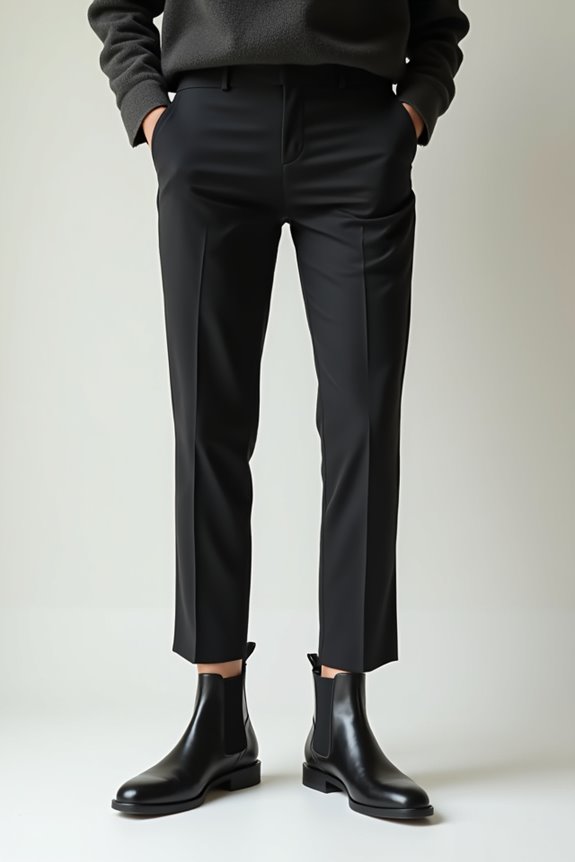
How you hem your trousers can make or break a Chelsea boot outfit—and honestly, that’s where most people stumble. I’ve found that cropped trousers with tapered cuts create that modern edge you’re after, especially when paired with Chelsea boots.
Cropped trousers with tapered cuts create that modern edge Chelsea boots demand—it’s where most people stumble.
Here’s what works:
- Straight-leg or slim-fit crops that graze your boot’s top, creating a balanced silhouette without bunching
- Hem length ending at or just above the boot shaft for a sharp, intentional transition
- Neutral tailored trousers in black, navy, or grey paired with matching Chelsea boots for cohesive styling
The trick? Avoid overly wide or boot-cut fabrics—excess material obscures your boots and kills that streamlined silhouette you’ve worked toward. When you nail this combination, you’re wearing an outfit that demonstrates you understand proportions.
Flannels and Workwear: The Country Aesthetic
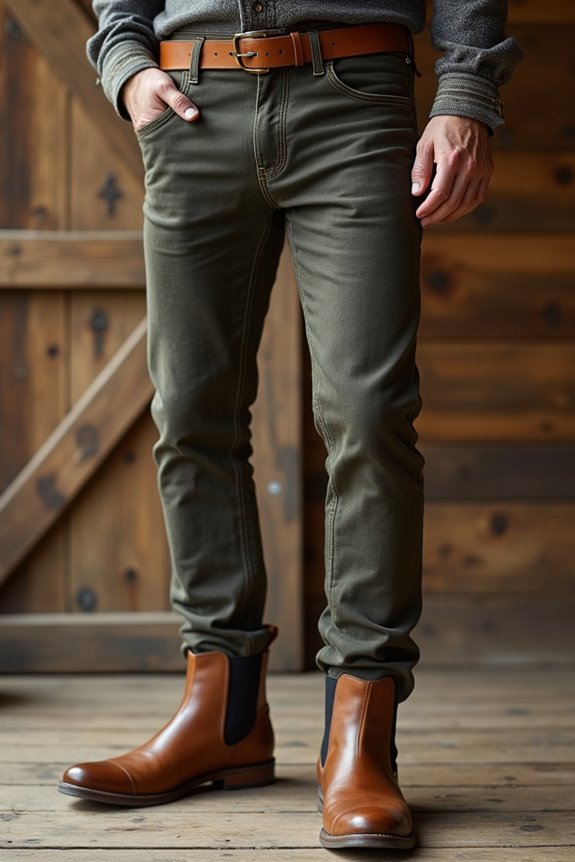
If you’ve mastered the streamlined proportions of cropped tailoring, you’re ready to flip the script entirely—because Chelsea boots aren’t exclusively the domain of polished city wear. I’ve found they’re equally at home in a rugged country aesthetic, pairing beautifully with flannel shirts and workwear jeans for that authentic blue-collar vibe. Dark-colored flannels create cohesive, textured looks that feel considered rather than accidental. Layer them with sturdy pieces like Berle trousers—durable options that coordinate with your boots. The key? Embrace heavier fabrics: tweed, wool, and substantial denim balance the boots’ weight, grounding your outfit in genuine rusticity. This isn’t performative countryside styling; it’s practical dressing that respects both garment and wearer.