

Sixty degrees demands layering strategy, not wishful thinking. I’d start with a breathable base—cotton blend or merino wool—then add a slim mid-layer (think cardigan, not chunky knit), and top it with a removable jacket. The trick? Your outfit shouldn’t feel locked in; you’re building flexibility for temperature swings.
Pair straight-leg jeans with ankle boots, grab a lightweight scarf, and you’ve got the foundation.
The nuances of proportions and fabric pairings, however, reveal why some outfits work better than others.
Is 60-Degree Weather Cold?
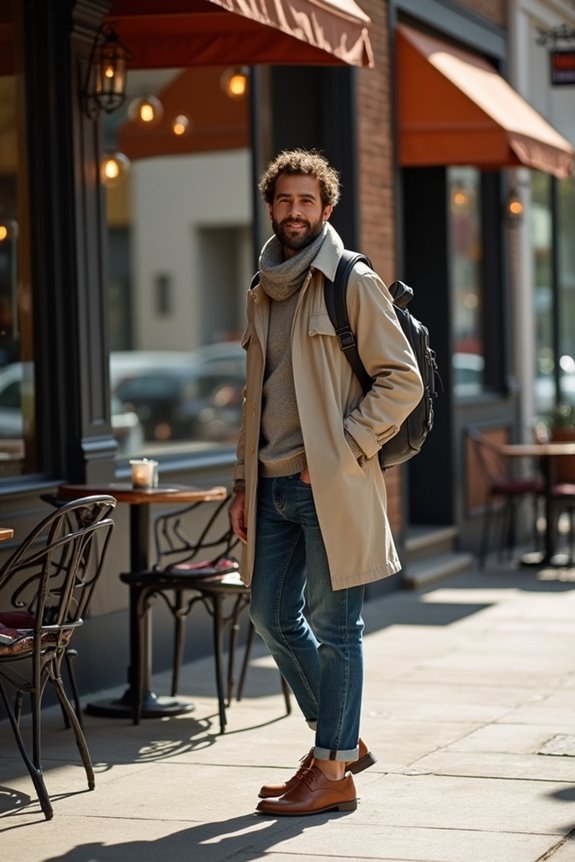
Why does 60 degrees feel like a completely different temperature depending on who you ask? The answer’s simpler than you’d think: context matters. I’ve noticed that 60-degree weather isn’t inherently cold—it’s the conditions surrounding it that shift perception. Wind transforms mild air into something chilly; humidity does similar tricks. Meanwhile, someone hiking experiences 60 degrees as pleasant, while a stationary observer shivers without proper layers.
Here’s where layering becomes your best option. I’d recommend starting with a long-sleeve top, then adding a light jacket for flexibility. Coastal regions feel colder at 60 degrees than inland areas with sunshine. Your activity level, regional climate, and personal metabolism collectively determine whether you’re comfortable or reaching for an extra scarf. It’s less about the number and more about understanding yourself.
Layer Smart: Your Base, Mid, and Outer Shell
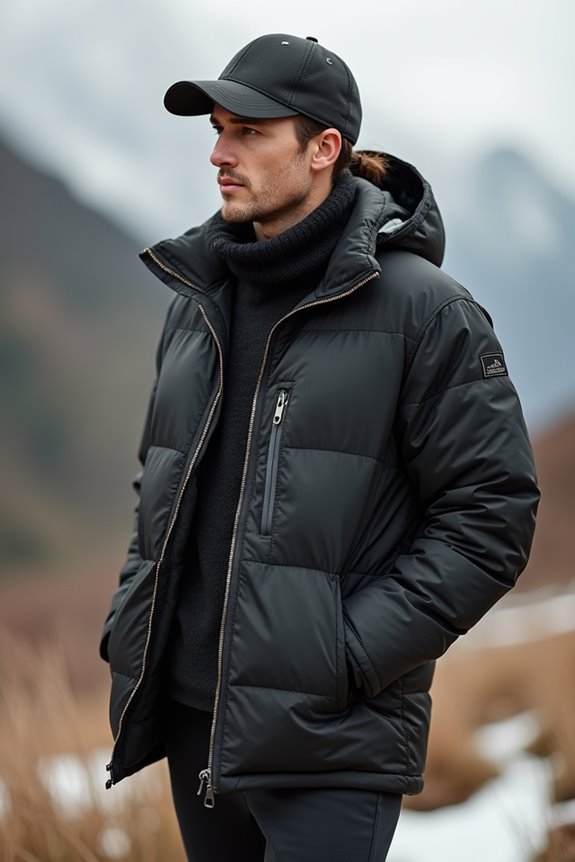
The three-layer system works because each component serves a specific purpose:
- Your base layer (cotton or merino blends) wicks moisture and prevents overheating
- Your mid-layer (thin sweaters, cardigans, denim) adds warmth without suffocating bulk
- Your outer shell (trench coats, bombers, shackets) shields you from wind and light rain
The advantage: you’re not locked into any single outfit. Each layer plays nicely with others in color and texture, letting you adjust as temperatures fluctuate. This flexibility means you’re actually comfortable—and when you’re comfortable, you look better.
Fabrics and Materials for 60-Degree Comfort
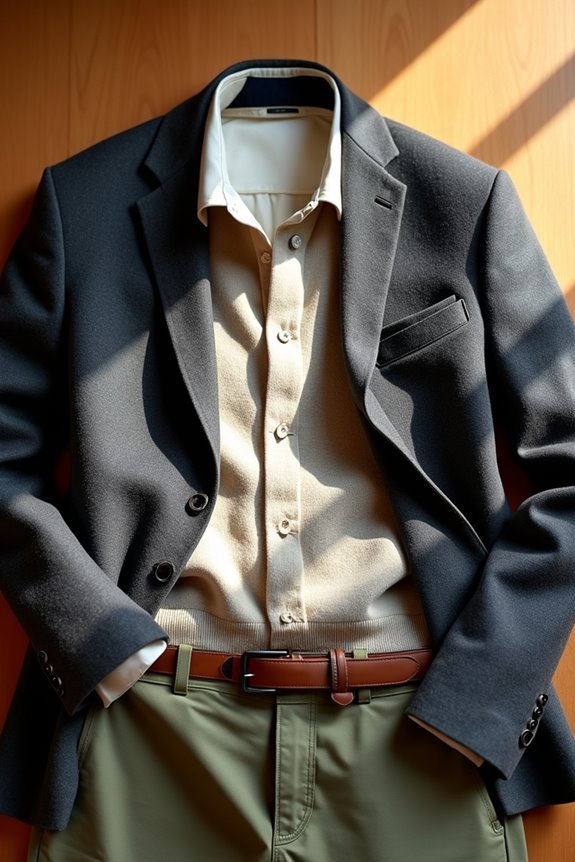
Once you’ve got your layering strategy down, the fabric itself becomes an important factor for 60-degree dressing. I’ve found that breathable fabrics—cotton blends, lightweight merino wool, and denim—work well during transitional seasons when temperatures fluctuate unpredictably. Your base layer should feature light cotton or jersey that wicks moisture away, keeping you comfortable as conditions shift. For mid-layers, thin knits and cardigans provide warmth without bulk (you know, the kind that makes you look twice your actual size). The key? Avoiding heavy knits entirely. They’ll trap heat and restrict movement, defeating your temperature-regulation purpose. Lightweight outer layers—trench or bomber jackets—complete the equation, protecting against wind while maintaining breathability. These material choices let you adapt smoothly, proving that smart fabric selection beats bulky layering every time.
Pick the Right Bottoms for 60 Degrees
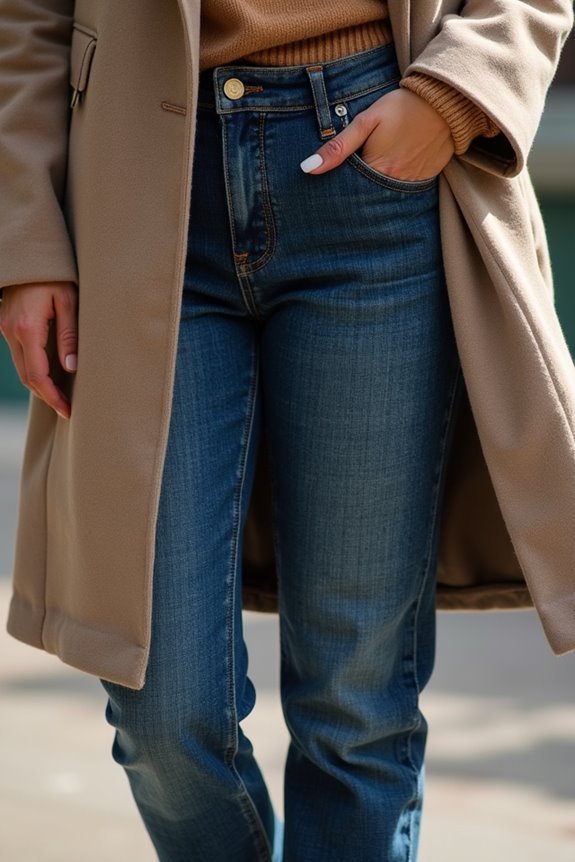
How you dress your legs matters just as much as what you put on top, and I’ve learned this the hard way after too many days spent either shivering in shorts or sweating through heavy pants. For 60-degree weather, I’ve found that selecting the right bottoms creates comfort and confidence.
- Straight-leg jeans offer timeless versatility—they’re neither too restrictive nor too loose for fluctuating temperatures
- Midi skirts paired with opaque tights provide elegant layering that adapts as the day warms
- Chinos deliver breathable structure without the heaviness that derails your comfort
- Cropped bottoms with fitted tops create proportional balance while maintaining mobility
These options in medium-weight fabrics strike that elusive equilibrium between warmth and breathability. You’re not sacrificing style; you’re investing in all-day comfort.
The Right Footwear for 60-Degree Days

When I’m dressing for 60-degree weather, I’ve found that ankle boots, loafers, and heeled sandals form a reliable trio—each offering the perfect balance of warmth and breathability that this temperamental temperature demands. Ankle boots provide that structured support and refinement for transition days, while loafers deliver the understated versatility that works equally well with chinos or midi skirts (and frankly, require minimal decision-making in the morning). Heeled sandals, particularly closed-toe or peep-toe styles, let me adapt as the day warms without sacrificing the sophistication that lighter footwear sometimes lacks.
Ankle Boots For Versatility
Why do ankle boots feel like the Goldilocks solution for 60-degree weather? They’re the sweet spot—not too heavy, not too light. I’ve found that leather or suede ankle boots with moderate heels balance cropped tops perfectly, while their breathable textures prevent overheating during afternoon warmups.
Here’s what makes them indispensable:
- They work with straight-leg jeans AND midi skirts (versatility that actually matters)
- Earth-tone pairing elongates your leg line with ease
- Flexible soles handle unexpected rain without fuss
- Low to moderate heels feel confident, not fussy
What I appreciate most is how ankle boots bridge morning chill and afternoon mildness. You’re protected without sacrificing style or practicality. They’re the outfit stabilizer we all need when temperatures refuse to commit—which, honestly, describes most spring days.
Loafers And Heeled Sandals
Loafers and heeled sandals work best when you treat them as complementary pieces rather than seasonal-specific items. This approach makes them reliable choices for fluctuating 60-degree weather. Loafers provide closed-toe coverage with breathable comfort, bridging cool mornings and mild afternoons. Heeled sandals offer a dressier option for warmer afternoons, though pairing them with cropped or midi hemlines protects exposed feet during cooler periods.
The practical approach involves pairing either option with straight-leg or wide-leg trousers to maintain proportion and lengthen your silhouette. Suede or smooth leather loafers in neutral tones—black, tan, navy—work across different layering combinations. When moving from office to evening, swap a lightweight cardigan or blazer over either shoe choice to maintain both comfort and polish.
Layering Jackets for 60-Degree Transitions
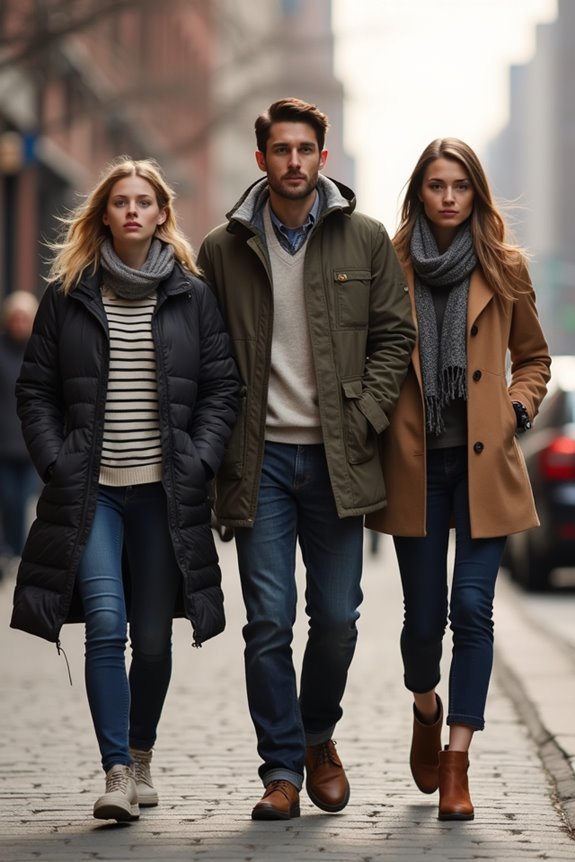
When you’re dressing for 60-degree weather, your jacket is the key piece—it’s the layer that determines whether you’ll actually stay comfortable or spend your afternoon peeling off sleeves like some fashion-challenged onion. The trick is choosing lightweight options (think utility jackets or windbreakers rather than leather jackets, which’ll trap heat faster than you can say “regret”) that let you adapt throughout the day without carrying around an extra sweater by noon. Fabrics matter too; nylon blends and treated suede resist light rain while staying breathable, which beats heavy knits every time and keeps you from looking like you’re cosplaying as a marshmallow.
Lightweight Jacket Styling Options
A lightweight jacket is your practical solution for 60-degree weather—it’s the difference between shivering at 8 a.m. and sweating through your shirt by noon. Mastering lightweight jacket styling helps you navigate temperature swings throughout the day.
Consider these versatile options:
- Utility jackets for practical appeal
- Trenches or trench-inspired coats for polished sophistication
- Faux-leather motos for edgy, contemporary flair
- Water-resistant rain jackets for unpredictable weather days
The key? Pair your lightweight jacket over simple striped tees or solid tops—this prevents visual bulk while maintaining balanced proportions. Choose styles hitting at or just below your hip; this keeps cropped or wide-leg silhouettes visible and flattering. For wet conditions, grab coated fabrics with adjustable cuffs that shield against drizzle without overcomplicating your layering strategy.
Layering Transitions Throughout Day
Once you’ve nailed your lightweight jacket selection, the real challenge emerges: managing those unpredictable temperature swings that make 60 degrees feel like three different seasons packed into one day. I’ve learned that versatile outer layers—think adjustable windbreakers or utility jackets—become your practical allies during layering transitions. By morning coolness, I start fully layered; by afternoon warmth, I’m strategically peeling back. The trick? Choose jackets you can actually remove without exposing an unflattering silhouette underneath. I keep my mid-layer fitted and my proportions balanced through intentional tucking or belting. This way, whether 60-degree weather shifts dramatically, I’m prepared. Your outer layer shouldn’t feel like permanent armor; it’s your flexible response to nature’s indecision.
Fabric Choices For Comfort
The fabric you choose for each layer fundamentally determines whether you’re comfortable or constantly adjusting your outfit like you’re auditioning for a fidgeting competition. I’ve discovered that lightweight fabrics—cotton blends, merino wool, and fine denim—create the foundation for successful 60-degree dressing.
Here’s what actually matters:
- Merino wool base layers wick moisture while regulating temperature better than cotton alone
- Cotton blends breathe naturally, preventing that clammy feeling when you move between environments
- Layering with varied textures (smooth cotton paired with knit cardigans) adds visual interest without bulk
- Breathable mid-layers and ventilated jackets prevent overheating during afternoon warmups
The trick? Choose fabrics that work together, not against you. When your base layer breathes properly and your mid-layer sits slightly loose, you’re not constantly shedding clothes or shivering. That’s the comfort zone we’re all chasing.
Outfit Ideas for Work and Business Casual Settings
How do you nail that sweet spot between looking put-together and actually feeling comfortable when the mercury hovers around 60 degrees? I’ve found that mastering 60-degree workwear hinges on strategic layering. A lightweight knit paired with straight-leg trousers and loafers creates that polished silhouette we’re all chasing. Alternatively, I layer a tailored blazer over a striped knit and finish with ankle-booties—formality meets transitional warmth without discomfort. For those preferring skirts, a midi with a tucked blouse and utility jacket balances femininity with office practicality. Ponte pants topped with a layered blouse and flats? Comfortable and streamlined. Each approach keeps you looking professional while staying seasonally appropriate—no overdressing, no shivering.
Casual and Weekend Looks for Everyday Wear
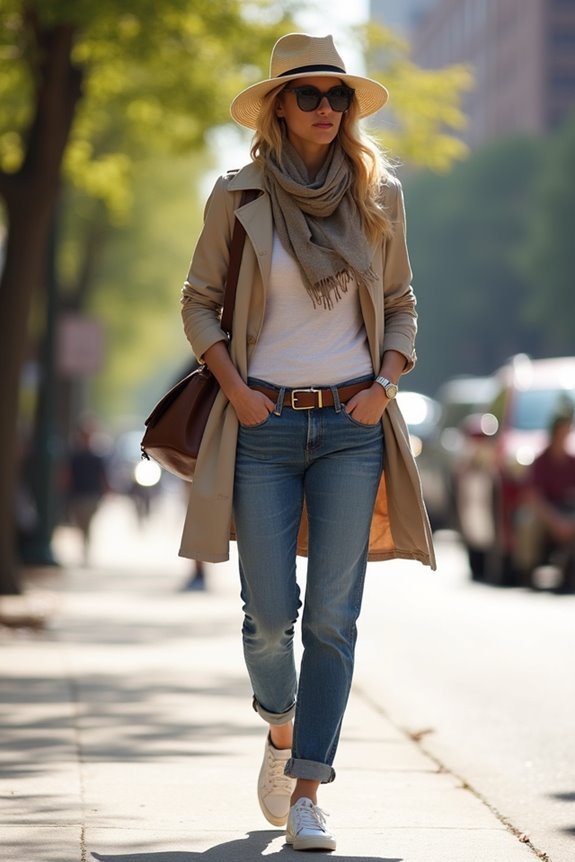
When you’re crafting a casual weekend look for 60-degree weather, layering with intention—think a cotton tee topped with a thin cardigan or denim shirt—balances comfort and polish without requiring much thought. The trick is choosing pieces that work together (a camel cardigan with white denim, say) and can be peeled off as the day warms up, which beats being stuck in an outfit that’s either too heavy or too skimpy. Pair these with straight-leg jeans, ankle boots, and maybe a lightweight utility jacket, and you’ll navigate temperature shifts while looking purposefully casual rather than accidentally underdressed.
Effortless Layering for Comfort
Why do we overcomplicate 60-degree dressing when layering thoughtfully works better?
I’ve discovered that comfort comes from strategic outerwear choices rather than bulk. Start with breathable cotton or merino wool—your foundation matters. Add a lightweight cardigan or denim shirt for warmth without sacrificing flexibility. Top it with a wind-blocking utility jacket or trench that adapts as temperatures shift.
Here’s what works for weekend dressing:
- Pairing loose tops with fitted bottoms prevents that overstuffed feeling
- Choosing loafers or ankle boots keeps proportions grounded and intentional
- Keeping accessories minimal allows outfit adjustments without fuss
- Building layering systems you’d actually wear repeatedly
This approach isn’t complicated, but it’s honest. You’re not fighting the weather—you’re working with it, creating comfort that feels natural and personal to you.
Weekend-Ready Outfit Combinations
The approach to 60-degree dressing works best when you release the belief that weekend wear requires either sacrifice or complexity. Layering serves as an effective tool—pairing a lightweight striped top with a cropped jacket and straight-leg jeans creates that balanced silhouette most people seek. A soft cardigan over a basic tee adapts well as weather shifts from cool morning to mild afternoon, while ankle boots complete the whole look.
For slightly dressier weekends, reach for a midi skirt with a cropped sweater and opaque tights—loafers add understated polish. The key benefit? Sticking with neutrals (cream, taupe, navy) while letting a single pop of color—perhaps a belt bag or scarf—draw attention. Your outfit becomes inherently versatile, and you’ll actually enjoy getting dressed.
Common Layering Mistakes and How to Avoid Them
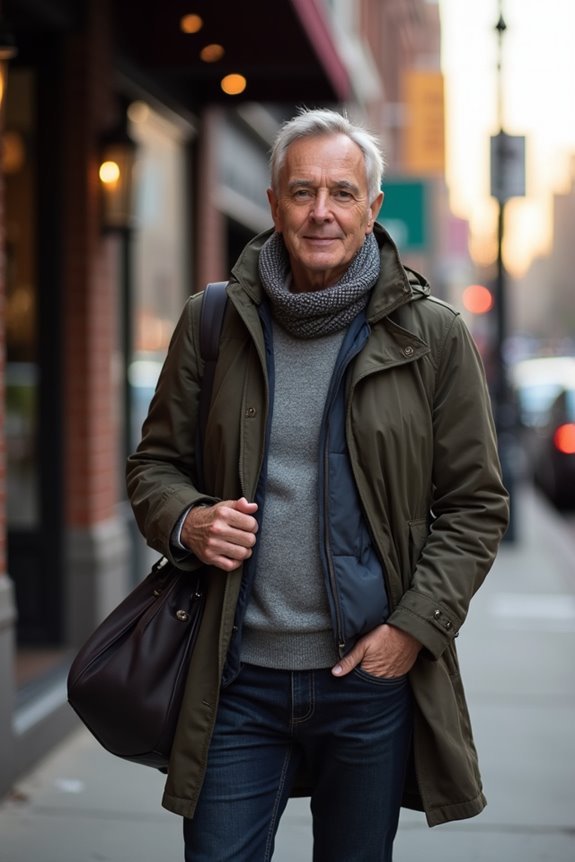
How often do you find yourself peeling off layers by mid-morning only to shiver again by evening?
I’ve learned that 60-degree dressing requires thoughtful choices. Here’s what I avoid:
- Heavy, bulky outerwear that traps heat and restricts movement as temperatures shift
- Non-breathable fabrics (thick wool, saturated synthetics) that trap moisture and create discomfort
- Multiple mid-layers without lightweight bases that create unnecessary bulk and restrict circulation
- Mismatched proportions—oversized tops paired with tight bottoms throw off balance entirely
The solution? I build my layering strategy with lightweight, breathable pieces that adjust to temperature swings. A fitted base layer, a slim mid-layer, and versatile outerwear give me flexibility without the bulk. This approach keeps me comfortable throughout the day—and honestly, my appearance improves when proportions align. Smart layering isn’t complicated; it’s just thoughtful.
Adjust Your Layers When 60 Degrees Feels Different
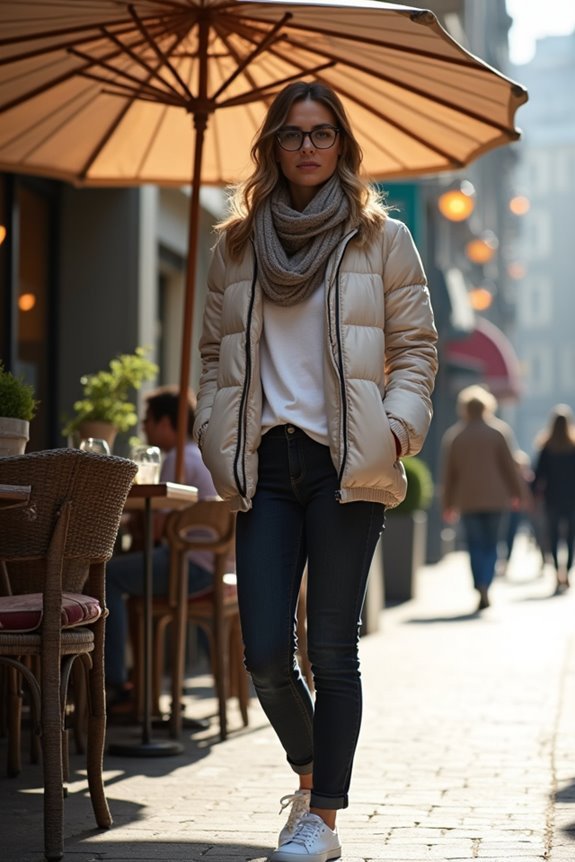
Once you’ve nailed the basics of layering—ditching the bulk and embracing proportional pieces—you’ll realize that 60 degrees isn’t actually one temperature; it’s more like a moving target that shifts between sunrise and sunset.
60 degrees isn’t one temperature—it’s a moving target that shifts between sunrise and sunset, demanding proportional layering.
I’ve found that adjusting your BaseLayer matters most. Cotton feels great at dawn, but merino wool keeps you comfortable as things warm up. Your mid-layer becomes negotiable—sometimes you’ll tie that cardigan around your waist by noon.
Here’s where it gets practical: your OuterLayer does the real heavy lifting. A lightweight trench adapts beautifully to unexpected wind shifts without trapping heat.
The trick? I build outfits modularly so I’m not fumbling through wardrobe choices midday. You’ll recognize quickly whether you’re underdressed or overdressed, then adjust accordingly. That’s when layering becomes intuitive rather than frustrating.
The Accessories That Make 60-Degree Outfits Click
Where do accessories actually earn their keep in a 60-degree outfit? They’re the unsung players that transform layering from functional to polished.
- A lightweight scarf adds warmth and texture without the bulk that makes you feel stuffed into winter
- Sunglasses protect your eyes when daylight hits harder than the temperature suggests
- A quality belt defines your silhouette under layers, keeping proportions balanced and deliberate
- A coordinated belt bag or crossbody purse ties your whole look together, especially when colors match your footwear
I’ve found that accessories don’t just complete 60-degree outfits—they signal you’ve thought things through. A cashmere beanie handles cool mornings without overheating when afternoon sun arrives. These small choices communicate belonging to a community that understands dressing isn’t about perfection; it’s about purpose.