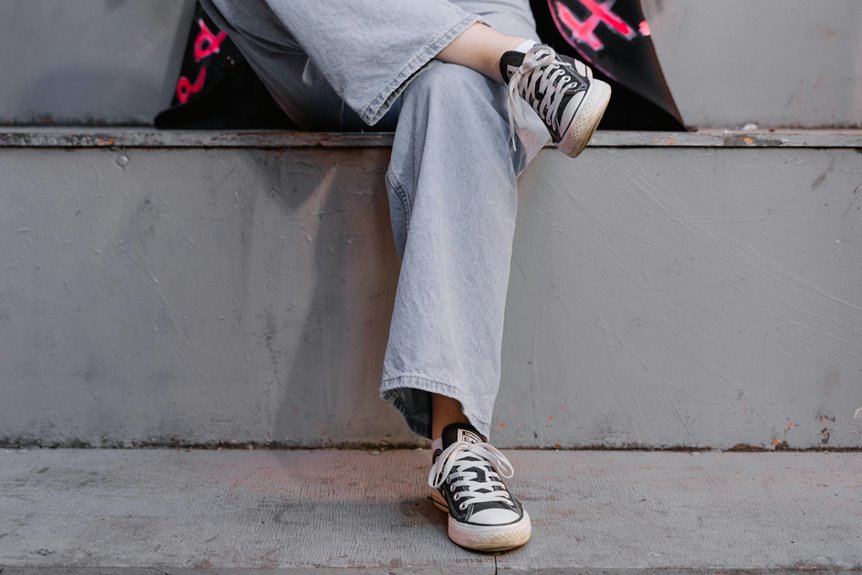
I’d focus on three essentials: dark jeans (deep indigo or black), polished loafers or Chelsea boots, and a fitted button-down or blazer.
Skip the ripped denim, sneakers, and anything screaming “gym day”—clubs care more about what you’re not wearing than excess.
Check your venue’s dress code beforehand; when uncertain, dress up slightly.
Fit matters tremendously; slim silhouettes keep you looking intentional rather than sloppy.
The specifics shift depending on your venue’s vibe, though, so there’s plenty more worth knowing.
Understanding Club Dress Codes Before You Go
Why’d you show up to that club last weekend only to get turned away at the door? Chances are, you overlooked the venue’s dress code—a rookie mistake that’ll tank your entry chances faster than you’d think.
Before heading out, I’d recommend checking the club’s website or social media for their specific entry guidelines. Dress codes vary widely depending on the venue and local culture. Some clubs enforce strict smart casual standards (no sneakers, ripped jeans), while others embrace relaxed urban wear. When in doubt, dress up rather than down; it’s your safest bet.
Club attire expectations shape everything—your shirt choice, pants fit, footwear selection. Loafers or Chelsea boots work better than sneakers most nights. Understanding these rules beforehand? That’s your ticket to actually getting inside.
Start Here: Dark Jeans and Dressy Loafers

I’d start with a pair of dark jeans—they’re your foundation for looking intentional rather than like you grabbed whatever was clean—and you’ll want to focus on the denim wash itself, steering toward deep indigos or blacks that read as polished rather than casual. Next, throw on some dressy loafers (think leather, not canvas) that’ll keep your feet comfortable while you’re dancing without sacrificing the upscale vibe that separates “I planned this outfit” from “I wore club clothes.” Once you’ve locked in these two pieces, you’re building your entire look around them, which means you’ve got a cohesive foundation that works with almost any top you choose.
Dark Denim Wash Selection
When it comes to clubwear, denim’s reputation takes a hit—but that’s mostly because guys show up in faded, distressed pairs that scream “I grabbed these from my everyday rotation.” Dark washes, however, completely flip the script.
I’m talking about deep indigo or jet black denim that reads as intentional and refined. Here’s what separates club-appropriate dark denim from the rest:
- Minimal distressing: Skip the rips entirely for an upscale look
- Rich color saturation: Deep, uniform tones photograph better under club lighting
- Subtle branding: Less visible logos maintain sophistication
- Quality construction: Heavier fabric holds its shape all night
This wash selection isn’t overthinking it—it’s recognizing that dark denim, paired smartly with dress shoes, signals you understand the room’s expectations without trying too hard.
Polished Loafer Styling
So here’s the thing about loafers in a club setting: they’re the unsung heroes of clubwear, sitting at that perfect intersection where polish meets practicality. I’ve found that pairing dark jeans with dressy footwear—specifically leather loafers in black or deep brown—creates that foundation you’ll actually feel confident wearing all night.
| Feature | Why It Matters | Club Impact |
|---|---|---|
| Leather Finish | Reflects club lighting beautifully | Elevates your presence |
| Well-Maintained Polish | Signals style awareness | Builds credibility |
| Dark Color | Stays versatile across venues | Works everywhere |
Your loafers’ condition honestly telegraphs everything about your attention to detail. That polished styling paired with a crisp button-down takes dark jeans from casual into deliberately considered territory. You’re not trying too hard—you’re simply respecting the space (and yourself).
Foundation Outfit Assembly
Now that you’ve locked in the footwear foundation, building around those polished loafers becomes straightforward. I’m talking about creating a cohesive base that signals you belong in any club setting.
Here’s your assembly blueprint:
- Dark jeans as your anchor—they’re versatile, forgiving, and they’re what club-goers actually wear
- Button-down shirt in black, white, or navy to establish structure and sophistication
- Blazer or sports jacket for added dimension (it matters)
- Leather belt matching your loafers to tie everything together
These pieces work in concert. Your dark jeans ground the outfit, while the button-down provides polish without screaming “overdressed.” Layer that blazer over top, and you’ve got presence. Keep everything slim-fitting—baggy silhouettes kill the vibe. This foundation isn’t just acceptable; it’s your ticket to looking intentional.
How Fit Changes Everything

The difference between looking sharp and looking like you’re wearing your older brother’s hand-me-downs comes down to one thing: how your clothes actually fit your body. I’ve learned that slim-fit shirts and jeans create that refined, intentional appearance clubs demand. Tailoring matters tremendously—a well-cut blazer elevates your entire presence. You’re not just dressing; you’re communicating confidence.
Here’s the thing though: fit isn’t about restriction. Choose movement-friendly fabrics that let you actually dance without feeling trapped. Dark neutrals with strategic color pops work brilliantly, keeping things refined while you’re on the floor.
When everything aligns—your proportions matching your clothes’ construction—you’ll notice how differently people respond to you. That’s not vanity; that’s just how tailoring operates.
Layering With a Dark Blazer for Versatility
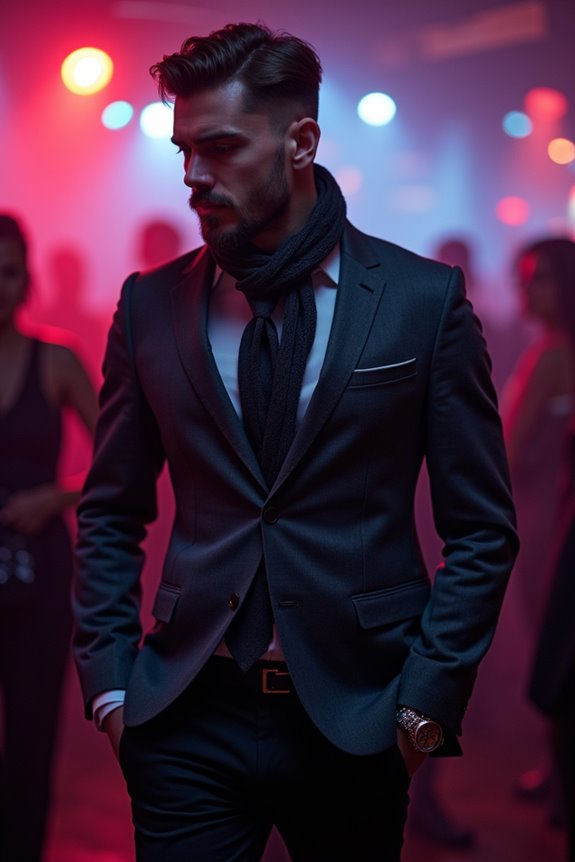
Why does a dark blazer work so well for club nights? It’s the versatile foundation that lifts your nightclub outfit. I’ve found that layering a crisp shirt beneath adds polish—you’re suddenly smart casual meets formal sophistication, which impresses bouncers and fellow clubgoers alike.
A dark blazer is the versatile foundation that instantly elevates your nightclub outfit with smart casual sophistication.
Here’s what makes this combo work:
- Slim-fit jeans or chinos maintain balanced proportions for comfortable dancing
- Dressier footwear (loafers, Chelsea boots, leather oxfords) replaces basic sneakers
- Rolled sleeves add personalized flair without overwhelming the ensemble
- Breathable fabrics keep you cool under venue lighting
The dark blazer does the heavy work. Pair it strategically, add a minimalist watch or pocket square, and you’ve got the formula down. You’ll fit in anywhere from upscale lounges to formal nights out.
Upscale Nightclubs: Button-Downs and Tailored Trousers
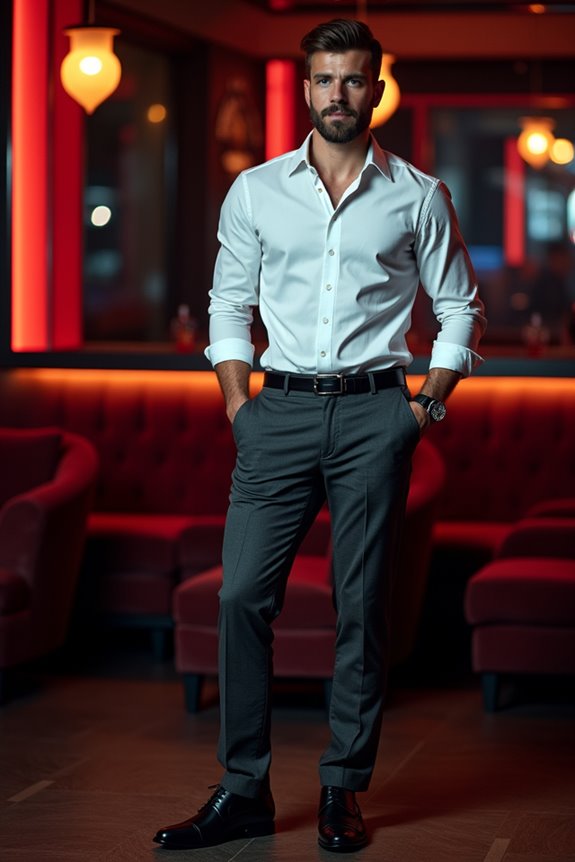
If you’re stepping into an upscale nightclub, that dark blazer I mentioned earlier becomes your opening move—but here’s where we shift gears toward a more refined approach. You’ll want crisp button-down shirts in black, white, or navy paired with charcoal or navy tailored trousers. This combination conveys sophistication without appearing forced (which is the entire objective). Slim-fit your shirt, tuck it in, and press those wrinkles away—they’re your enemy here. Skip the sneakers entirely; loafers, Oxfords, or brogues align perfectly with upscale club dress code expectations. The monochromatic or subtly coordinated palette keeps you looking intentional rather than scattered. You’re not just dressed; you’re strategically positioned to fit seamlessly into that elevated environment.
Rooftop and Lounge Clubs: Smart Casual Essentials
I’d recommend building your rooftop look around a neutral palette—think soft grays, blacks, navies, and whites—because these colors keep you looking intentional rather than like you raided a clearance bin (and they photograph better in dim lighting). Layering works well here; a slim-fit button-down paired with a light cardigan or jacket doesn’t just handle those evening breezes, it also gives you flexibility if you’re moving between the lounge and dance areas. Stick with suede loafers or pristine leather sneakers to nail that balance between polished and approachable, avoiding the distressed denim and loud patterns that’ll read as trying too hard.
Neutral Palette Foundation
How do you command a rooftop or lounge club without screaming for attention? You embrace restraint. A neutral palette foundation isn’t boring—it’s a sophisticated strategy. Building your upscale clubwear around charcoal, navy, black, white, and beige creates polish while keeping focus on *you*, not your outfit.
Here’s my approach to nailing this:
- Avoid loud prints and denim as your base layer
- Select breathable fabrics like cotton and linen blends for warm environments
- Stick to fitted silhouettes that preserve movement
- Maintain color cohesion across all pieces
This smart casual strategy works because it respects the venue’s aesthetic expectations without appearing overdressed. You’re signaling belonging through restraint rather than volume—a confident move that distinguishes you from the noise.
Layering For Comfort
Why does layering matter when you’re heading to a rooftop or lounge club? Smart-casual layering balances style with practicality—you’ll need flexibility as temperatures shift between outdoor breezes and crowded indoor spaces.
Start with breathable fabrics like cotton or linen blends; they’ll keep you comfortable without trapping heat. Add a lightweight cardigan or jacket that complements your neutral palette, giving you options without bulk. The key is restraint: slim-fit base layers allow comfortable movement on the dance floor, while structured outer pieces maintain that polished aesthetic.
Think of layering as insurance. You’re not just dressing; you’re strategizing comfort for hours of mingling and dancing. Strip down when you’re warm, layer up when the evening cools—it’s that simple, really.
EDM and Festival Clubs: Dark, Streamlined Aesthetics
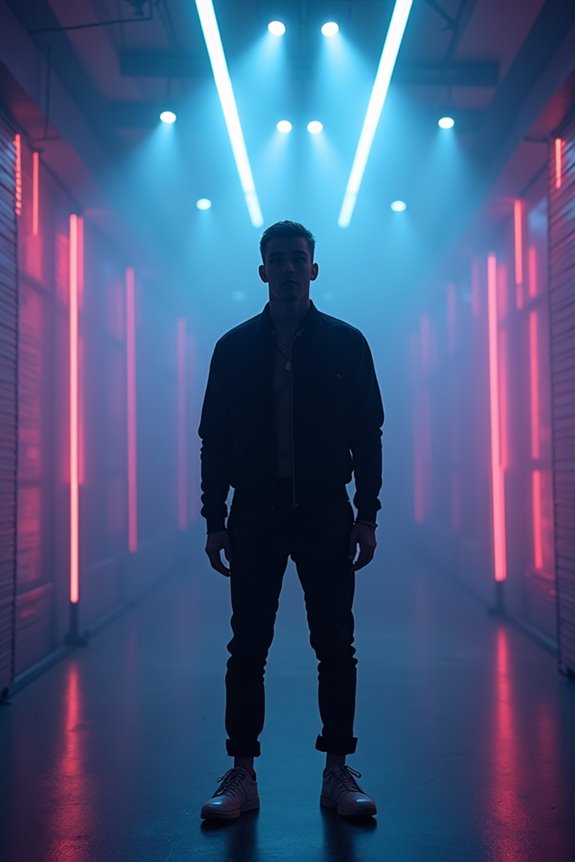
The dance floor’s pulsing lights and relentless bass demand a different uniform than your average nightclub—one built on restraint rather than statement-making. I’ve learned that EDM and festival clubs reward a dark, streamlined aesthetic that lets the music—not your outfit—take center stage.
Here’s what actually works:
- Black or charcoal tops paired with dark denim or tech pants create visual cohesion under strobe lighting
- Breathable fabrics keep you comfortable during extended sets without clashing with the vibe
- Minimal leather or clean sneakers as footwear (distressed looks undermine the polished effect)
- Subtle accessories like slim belts or discreet watches maintain sharpness without distraction
You’re creating a visual foundation that disappears into the environment. That’s the whole point—blending in while looking intentional about it.
Hip-Hop Venues: Clean Streetwear Without the Baggy Fit
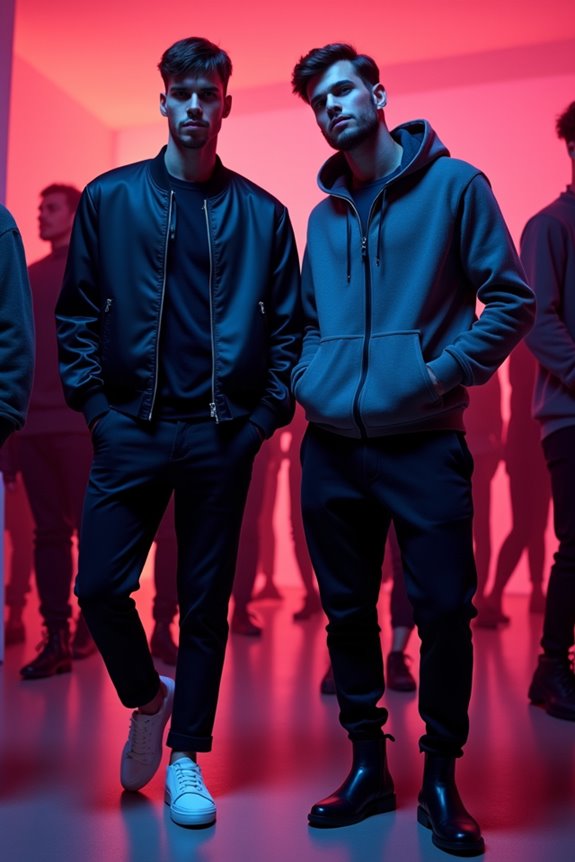
I’ve learned that hip-hop venues reward a different shoe strategy than you might expect—clean sneakers or Chelsea boots aren’t just acceptable, they’re necessary for pulling off that sharp streetwear look without veering into baggy territory. The key is understanding that footwear carries serious weight in this space; minimalist sneakers ground your fit with contemporary polish, while Chelseas add an unexpectedly sophisticated edge that signals you’ve thought things through (even if you’re playing it cool about it). Either way, your shoes should whisper rather than shout, giving your streamlined silhouette that finishing touch of deliberate style that separates looking composed from looking like you’re trying too hard.
Clean Sneakers & Chelseas
Hip-hop venues call for a different streetwear formula than you’d find at other clubs—one that swaps oversized silhouettes for a cleaner, more intentional fit. Your footwear choice matters more than you’d think when anchoring this aesthetic.
I’d recommend focusing on:
- Clean minimal leather sneakers that look fresh without screaming “new”
- Chelsea boots for refined polish that works with slim fits
- Monochromatic club footwear in black or charcoal to match your top and bottoms
- Brands prioritizing understated design over flashy branding
Chelsea boots give you that refined edge—they’re part streetwear, part sophistication. Clean sneakers work equally well if you choose minimal designs over chunky silhouettes. Either option keeps your overall look cohesive without sacrificing the edge hip-hop culture demands. You’re aiming for purposeful, not accidental.
Sharp Fit Without Baggy
Footwear anchors your look, but the silhouette you’re building around it is what actually makes or breaks a hip-hop venue outfit. I’m talking about embracing slim-fit everything—it’s the streetwear foundation that separates you from looking like you raided your dad’s closet circa 2003. Pair clean sneakers or Chelseas with dark denim that actually hugs your frame rather than drowning it. The key is hitting the right proportions when your jeans meet your shoes—no pooling, no skin-tight fits. Layer a fitted jacket if you’re feeling it, but remember: bulk kills the vibe. Your goal isn’t disappearing into the crowd—it’s looking deliberate, coordinated, and well-assembled. That’s the streetwear standard nowadays, and honestly, it’s what commands respect in any venue.
Breathable Fabrics for Club Wear
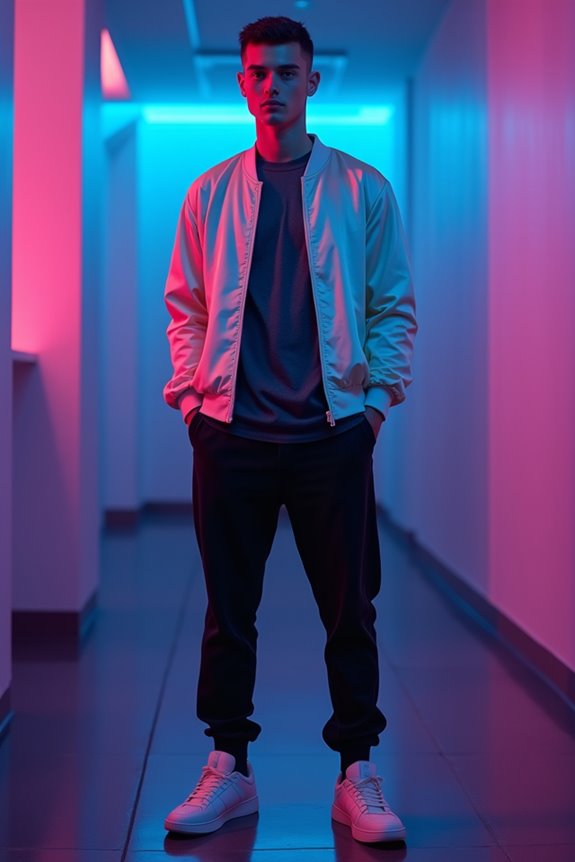
When you’re planning to spend hours sweating under strobe lights while surrounded by hundreds of other people doing the same, fabric choice becomes essential—and I’m not just talking about looking good.
I’ve learned that breathable fabrics significantly improve your club experience. Here’s what actually works:
- Cotton and linen blends regulate temperature naturally, keeping you comfortable through extended dancing
- Moisture-wicking dress shirts pull sweat away from your skin, so you stay dry despite the heat
- Lightweight knits maximize airflow without sacrificing style or fit
- Single-layer pieces beat heavy synthetics that trap heat and cause visible discomfort
Skip polyester entirely—it’s the enemy of all-night wear. Instead, prioritize natural fiber content. You’ll move better, feel fresher, and honestly, you’ll appear more composed when you’re not visibly overheating. That’s the real advantage here.
Shoes That Work at Any Club Door
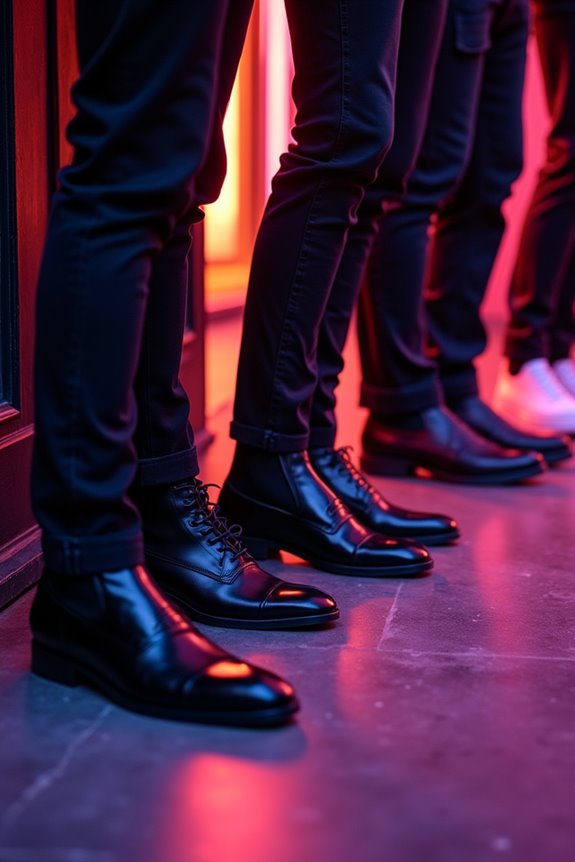
Your shoes matter far more than most guys realize—they’re often the first thing bouncers evaluate, and they’re definitely the first thing your feet will complain about after three hours of dancing. Polished loafers and Chelsea boots are your safest bets; they pair seamlessly with blazers and dark jeans while getting you past any club door. Leather dress shoes like oxfords or brogues work particularly well at stricter venues. Dress sneakers can work at casual spots, though pristine leather versions perform better than athletic-looking pairs. Skip distressed denim entirely—it signals you didn’t try. The bottom line? Invest in quality footwear that looks intentional. Your feet (and the bouncer) will thank you.
Leather Jackets and Edgy Pieces for Statement Style
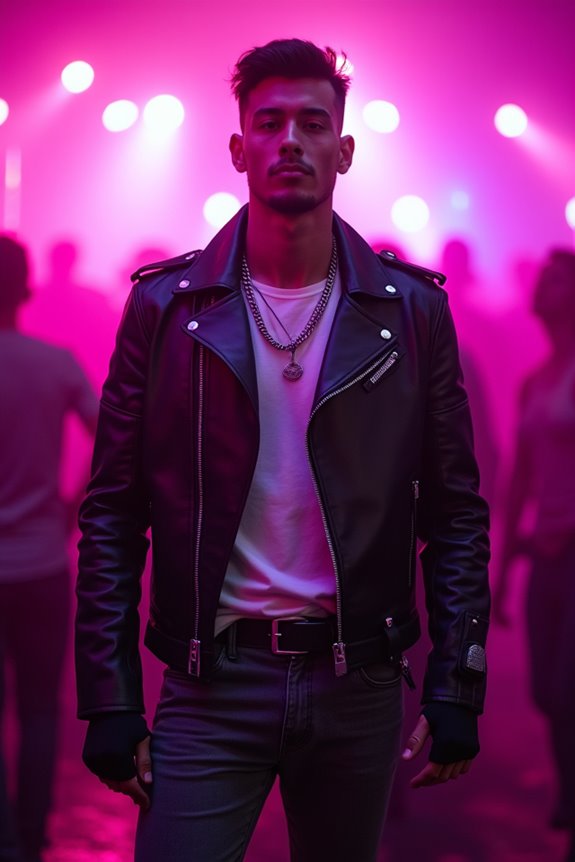
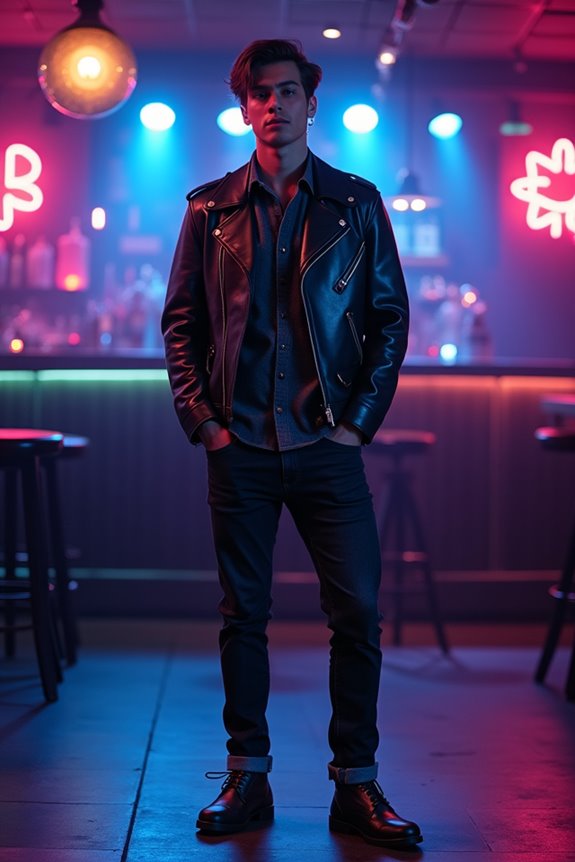
A leather jacket brings substance to your club look—but the stronger your outerwear, the more minimal your underlayers should be. A reclaimed black biker jacket with metal trims carries weight and longevity beyond current cycles, so pair it with a plain black tee or crisp button-down rather than competing patterns that muddy the whole aesthetic. Keep your denim dark and clean, skip the distressed look entirely, and finish with Chelsea boots or polished brogues—because edgy doesn’t mean sloppy.
Leather Jacket Styling Essentials
A leather jacket’s got staying power—it’s been a club essential since the rebellious ’50s, and frankly, it’s not going anywhere. Here’s how I’d nail the styling:
- Pair it with fitted basics: A clean tee or button-down keeps focus on your leather jacket as the statement piece
- Choose dark jeans or business casual trousers: This grounds your look with sophistication and versatility
- Invest in polished footwear: Chelsea boots or leather brogues enhance the entire outfit
- Keep layers minimal: Avoid loud prints or distressed denim that’ll compete for attention
The key? Balance. Your leather jacket commands the room, so everything else plays a supporting role. Select breathable leather with a smooth finish—clubs are dusty and sticky, so practicality matters. You’re not overdressed; you’re deliberate. That distinction is what counts.
Edgy Pieces and Balance
Once you’ve got the leather jacket dialed in, it’s time to layer in pieces that amplify that edgy aesthetic without letting things spiral into costume territory. I’ve found that pairing your jacket with a graphic tee creates that masculine vibe you’re after—just keep the silhouette slim and balanced with slim-fit jeans. Dark, clean denim works best here; distressed fabric muddies the statement you’re making.
Ground everything with chukka boots or business casual sneakers (nothing too aggressive). Here’s where restraint matters: minimal accessories like a simple chain or watch let your leather jacket remain the focal point. This edgy balance isn’t about overdoing it—it’s about strategic simplicity. You’ll move freely on the dance floor while looking deliberate, which frankly, is the whole point.
All-Black and All-White Outfits: When They Work Best
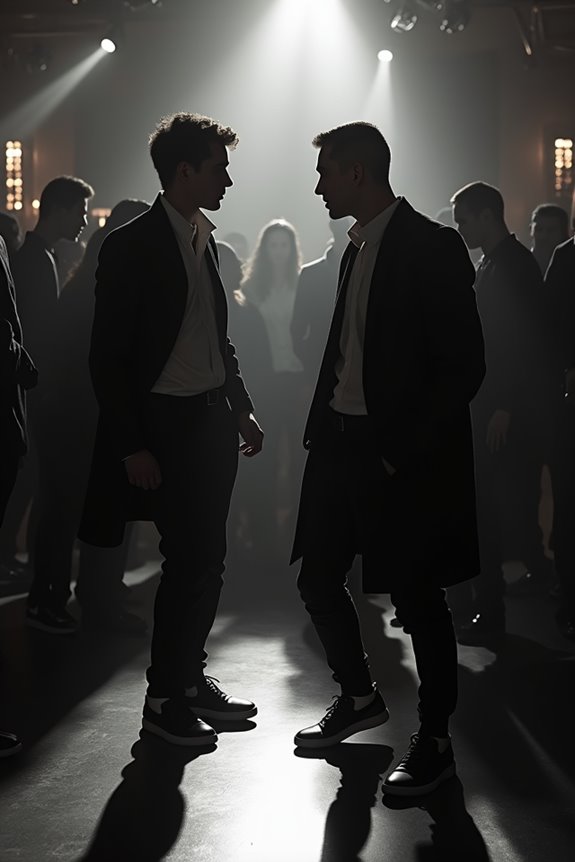
Why do monochrome outfits work so well for dance clubs? I’ve found that both all-black and all-white ensembles create visual impact while respecting the club dress code’s unspoken sophistication. Here’s what I’ve learned about making each palette work:
- All-black outfits deliver that sleek, streamlined silhouette—pair dark jeans or trousers with a textured dress shirt for subtle depth under moody lighting
- All-white looks require quality fabrics and sharp tailoring to avoid sheer disasters (especially with flash photography)
- Footwear choice matters equally; polished leather works universally, grounding either palette
- Minimal accessories—one statement watch, perhaps—keep the monochrome vibe cohesive rather than visually chaotic
Both palettes signal intention without screaming for attention. They’re, frankly, the safest bet for looking like you belong.
What to Leave at Home: Common Clubbing Mistakes
Now that you’ve nailed the monochrome formula, let’s talk about what’ll actually get you turned away at the door. I’ll be blunt: avoid athleticwear entirely. Sneakers, ripped jeans, and construction boots scream gym rat, not club-goer. Distressed denim and oversized silhouettes won’t work either—they undermine the sharp aesthetic clubs expect. Hats? Leave them home; most upscale venues prohibit them outright. When in doubt, I’d recommend leaning smart casual with a blazer. Before committing to any outfit, check the venue’s specific dress code online or on social media. These venue rules exist for a reason, and respecting them signals you’re serious about fitting in. Skip the casual vibe entirely—you’ll thank yourself later.
Layering for Summer, Fall, and Winter Clubs
How you layer depends entirely on the season, and getting this right separates the sweaty guys from the ones who actually belong on the dance floor.
I’ve learned that strategic layering—rather than just throwing on whatever’s clean—keeps you comfortable while maintaining that sharp, club-ready look. Here’s what works:
- Summer: Cotton or linen blends with rolled-sleeve button-downs and slim-fit chinos preserve airflow
- Fall: Lightweight blazers over fitted polos in neutral tones adapt to cooling temperatures
- Winter: Leather or bomber jackets layered over turtlenecks deliver that upscale vibe (dark tones only)
- Year-round footwear: Polished loafers, Chelsea boots, or oxfords ground your entire look
The real trick? Bring slim, easily removable outerwear indoors. Bulky jackets restrict your movement on the floor and signal you didn’t plan ahead. Quality fabrics and proper fit matter far more than quantity.
Building Your Club Outfit Checklist
Once you’ve nailed the layering basics, the real work begins: assembling a cohesive outfit that actually works on the dance floor. I’ve found that starting with a solid button-down shirt—think black, white, or navy—gives you credibility without screaming try-hard. Pair it with dark jeans or chinos, then add a blazer for upscale venues (your future self will thank you). Your dress shoes matter more than you’d expect; loafers and Chelsea boots beat sneakers every time. Here’s your checklist:
| Foundation | Details |
|---|---|
| Button-Down Shirt | Solid colors, breathable cotton |
| Dark Bottoms | Jeans or chinos for movement |
| Blazer (Optional) | For upscale venues only |
| Dress Shoes | Loafers, boots, oxfords |
Comfortable fabrics let you actually dance rather than suffer through the night. Match your belt to your shoes—cohesion works.